
Verified dimensional tolerances, strict metallurgical compliance, and full heat-traceability certificates for critical mechanical assemblies.
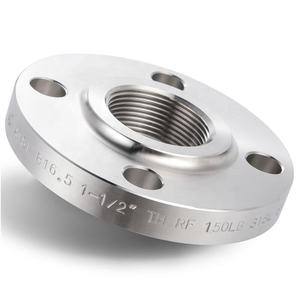
Precision NPT/BSPT threaded forged flange in ASTM A182 F304/F316L, engineered for non-welded high-pressure gas and liquid piping lines.
View Specifications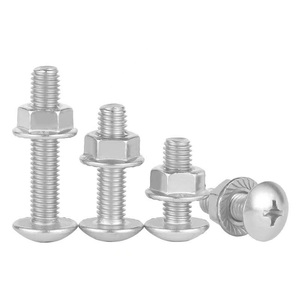
Truss round head square neck carriage bolts with Class 4.8/8.8 tensile strength and protective electro-galvanized coating for heavy timber and metal framework.
View Specifications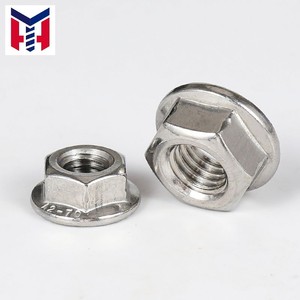
Lightweight Grade 5 Ti-6Al-4V flange locking fasteners offering superior strength-to-weight ratio and vibration loosening resistance in racing and aerospace setups.
View Specifications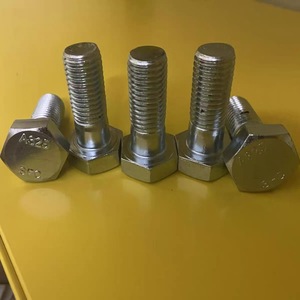
Quenched and tempered high-tensile Grade 10.9 structural bolts hot-dip galvanized for civil engineering, bridge girders, and commercial construction joints.
View Specifications
Precision metric coarse thread structural bolts manufactured to international DIN/ISO standards with uniform zinc electroplating or thermal diffusion coating.
View Specifications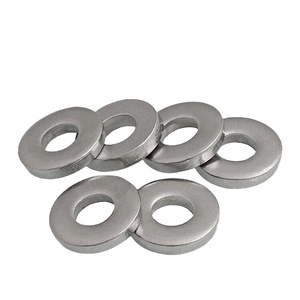
Heavy-gauge thickened flat washers engineered to distribute compressive preload over bolted flange surfaces without dishing or mechanical yield under high torque.
View Specifications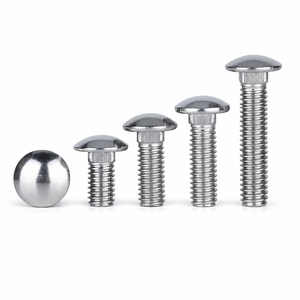
Carbon steel Grade 4.8 / 6.8 zinc-plated coach fasteners manufactured for automated mechanical assembly, structural racking, and security fastening fixtures.
View Specifications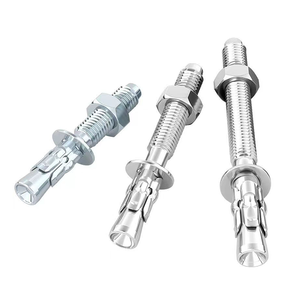
Expansion anchor studs in austenitic stainless steel AISI 304, delivering code-compliant high-pullout strength for structural base plates and pipe flange supports.
View SpecificationsA rigorous evaluation of closed-die forging, grain boundary sensitization control, and material traceability for global engineering procurement directors.
Modern industrial piping systems operate under severe combinations of thermal cycling, cyclic pressure shock, corrosive fluids, and mechanical vibration. In petrochemical refineries, offshore oil and gas platforms, liquefied natural gas (LNG) regasification terminals, and pharmaceutical synthesis plants, the structural integrity of every bolted flanged joint represents a primary containment barrier. Sourcing wholesale stainless steel flanges from premier Chinese manufacturers requires technical discernment between commodity plate-cut components and precision hot-forged, solution-annealed pressure boundary fittings.
The selection of stainless steel grade dictates operational longevity and lifecycle capital expenditure. Global procurement teams must balance initial material costs against localized pitting corrosion, crevice attack, and chloride-induced stress corrosion cracking (CSCC). Below is an engineering overview of the primary alloys processed across our forging cells:
| Material Grade | UNS / EN Spec | Tensile Strength (Min. MPa) | Yield Strength (0.2% Offset, Min. MPa) | Elongation (% in 2") | Hardness (Max HBW) | PREN Rating | Primary Industrial Service |
|---|---|---|---|---|---|---|---|
| ASTM A182 F304L | S30403 / 1.4307 | 485 | 170 | 30 | 187 | ~18.5 | Cryogenic LNG, Food, Mild Chemicals |
| ASTM A182 F316L | S31603 / 1.4404 | 485 | 170 | 30 | 187 | ~24.5 | Offshore Piping, Chemical Transport |
| ASTM A182 F321 | S32100 / 1.4541 | 515 | 205 | 30 | 217 | ~19.0 | Thermal Exhaust, Refinery Furnaces |
| ASTM A182 F51 (2205) | S31803 / 1.4462 | 620 | 450 | 25 | 290 | ≥ 35.0 | Sour Gas (NACE), Subsea Flowlines |
| ASTM A182 F53 (2507) | S32750 / 1.4410 | 750 | 550 | 15 | 310 | ≥ 42.0 | High-Pressure Brine, Desalination |
International piping projects frequently encounter geometric misalignment between North American (ASME/ANSI) and European (EN/DIN) flange configurations. While both specifications govern pressure containment, key dimensional and sealing interface differences must be addressed prior to procurement:
Operating under rigorous international compliance frameworks, our production ecosystem bridges Chinese industrial capacity with strict Western engineering validation.
Certified pressure equipment compliance adhering to European safety directives. Full compliance ensures unrestricted application in European boiler, heat exchanger, and critical pressure vessel packages.
Utilizing high-tonnage hydraulic friction-screw forging presses. Every billet is forged under controlled soaking temperatures, ensuring continuous grain boundary orientation and peak dynamic fatigue endurance.
Equipped with optical emission spectrometers for PMI, Charpy impact testing down to -196°C, hydrostatic pressure testing up to 10,000 psi, ultrasonic flaw detection, and liquid penetrant examination (PT).
We eliminate assembly mismatch risks by supplying paired ASME A193 B7/B8/B8M high-strength studs and heavy hex nuts alongside forged flanges, guaranteeing uniform bolt torque distribution and zero thread galling.
Beyond commodity 304/316, our forge handles nickel alloys (Inconel 625, Hastelloy C276), Monel 400, titanium, phosphor bronze, and custom large-diameter forgings up to NPS 60 (ASME B16.47 Series A & B).
Machined flange faces are treated with clean solvent-free rust inhibitors, capped with heavy-duty impact-resistant plastic covers, desiccated, and crated in fumigated ISPM-15 plywood boxes for secure maritime voyages.
How digital traceability, green steel decarbonization, and modular plant designs are transforming global flange manufacturing.
The transition toward Industry 4.0 has rendered paper-based Mill Test Certificates obsolete for major EPC contractors. Sourcing directors increasingly mandate permanent, deep laser-etched 2D DataMatrix codes on the rim of every flange.
Scanning the cryptographic QR identifier links field engineers directly to cloud-hosted spectral heat chemistry, solution annealing heat-treatment time-temperature charts, Charpy impact test logs, and third-party inspection sign-offs. This eliminates fraudulent documentation and shortens site incoming inspection times from days to seconds.
With the European Union Carbon Border Adjustment Mechanism (CBAM) entering full enforceability, international importers face carbon tariff penalties on raw steel components lacking audited emissions baselines.
Forward-thinking Chinese flange exporters are actively converting billet heating furnaces from natural gas to electric induction powered by renewable photovoltaic microgrids. Sourcing billets originating from Electric Arc Furnaces (EAF) with scrap-charge ratios above 80% lowers the embodied carbon footprint per metric ton, shielding overseas buyers from punitive carbon import taxes.
Manual lathe machining is incapable of maintaining the stringent geometric tolerances demanded by high-vibration subsea and nuclear installations. Modern machining workflows integrate automated multi-axis CNC cells with live tool spindle monitoring.
In-line Coordinate Measuring Machines (CMM) and non-contact optical laser profilometry measure bolt circle pitch, gasket groove perpendicularity, and serration pitch uniformity with micron-level fidelity. Out-of-spec parts are automatically rejected prior to surface passivation.
EPC contractors are minimizing expensive field welding by procuring pre-fabricated, hydro-tested piping spool headers and valve assemblies. As a consequence, wholesale suppliers must evolve from basic component brokers into integrated solution providers.
Offering factory-welded flange-to-elbow pipe assemblies, high-integrity welded neck nozzles, and complete stud-and-gasket installation sets allows engineering projects to bypass bottleneck site fabrication stages while guaranteeing system-level pressure warranty.
Detailed metallurgical, quality control, and shipping answers to assist procurement engineers and supply chain specialists.
ASTM A182 forged flanges undergo severe plastic deformation at hot forging temperatures (1050°C–1200°C), refining the internal dendrite cast structure into a continuous, directional grain flow that conforms to the flange geometry. This grain flow provides superior impact toughness, fatigue life, and ductility under dynamic thermal and pressure cycling. Plate-cut flanges, punched or waterjet cut from rolled plate, possess directional planar weakness along the transverse axis and frequently suffer from internal laminations, making them susceptible to brittle delamination under heavy bolt torquing or bending moments.
For H2S-bearing sour oil and gas service, austenitic grades (F316L) and duplex grades (F51/2205) must undergo strictly verified solution annealing heat treatments followed by water quenching to guarantee the complete dissolution of intermetallic phases (sigma σ, chi χ). We verify that bulk material hardness does not exceed the maximum allowable threshold (22 HRC for austenitic; 28 HRC / 290 HBW for duplex). Furthermore, our lab conducts ASTM A262 Practice E intergranular corrosion testing and ASTM G48 ferric chloride pitting tests to validate microstructural integrity.
Every delivery is accompanied by an inspection certificate conforming to EN 10204 Type 3.1, traceable directly to the unique heat number stamped on each flange body. The certificate provides full optical emission chemical analysis, tensile testing (Rm, Rp0.2), elongation percentage, reduction of area, Charpy V-notch impact values at specified design temperatures, hardness values, and non-destructive examination (NDE) sign-offs. Third-party inspection (TPI) endorsements under EN 10204 Type 3.2 by Lloyd's Register, DNV-GL, TÜV, SGS, or Bureau Veritas are regularly coordinated upon purchase specification.
Per ASME B16.5 Paragraph 6.4.5, standard Raised Face finishes feature a serrated concentric or spiral phonographic grooving with a surface texture of 125 to 250 microinches AARH (Arithmetic Average Roughness Height), equivalent to Ra 3.2 µm to 6.3 µm. This controlled micro-grooving is generated using a round-nosed tool with a 1.6 mm radius at a feed rate of 0.8 mm per revolution, ensuring adequate frictional bite into spiral-wound graphite or PTFE gaskets without cutting the sealing element.
Direct mechanical coupling of austenitic stainless steel to carbon steel in an electrolyte creates a severe galvanic cell, accelerating galvanic corrosion of the less noble carbon steel pipe. In such design scenarios, we supply engineered Flange Isolation Kits (FIK). These packages comprise full-face or ring-type dielectric insulating gaskets (such as G-10 / G-11 glass reinforced epoxy with PTFE seals), precision Mylar/Nomex bolt insulating sleeves, and hardened phenolic/stainless steel backup washers to break electrical conductivity.
Our manufacturing envelope spans nominal pipe sizes from NPS 1/2 (DN 15) through NPS 60 (DN 1500). Standard pressure classes include ASME Class 150, Class 300, Class 600, Class 900, Class 1500, and Class 2500, as well as European DIN/EN PN 6, PN 10, PN 16, PN 25, PN 40, PN 64, PN 100, and PN 160. Flange configurations encompass Welding Neck (WN), Slip-On (SO), Blind (BL), Socket Weld (SW), Lap Joint (LJ), Threaded (TH), Long Welding Neck (LWN), Spectacle Blinds, and custom orifice flanges.
For standard sizes (NPS 1/2 to 24) in common grades (304L, 316L) stocked in semi-machined forging inventory, turnaround times range between 10 to 15 business days. Heavy forging runs, large-diameter ASME B16.47 flanges, or custom duplex/super duplex alloys generally require 25 to 40 days, including complete heat treatment and destructive testing qualification. Minimum Order Quantities are flexible: we support project sample approvals or valve-skid packages down to single-piece quantities, alongside full container load (FCL) commercial distribution agreements.
All incoming stainless steel raw material is sourced exclusively from premier state-accredited steel mills (such as Tsingshan, Baosteel, and TISCO) with raw heat certificates. Prior to billet shearing, 100% of material undergoes handheld X-ray Fluorescence (XRF) Positive Material Identification (PMI). Each billet is stamped with a control batch serial number that follows it through hot forging, heat treatment, CNC turning, and marking. Stenciled markings on the final product include manufacturer mark, standard, size, rating, grade, schedule, and heat number.