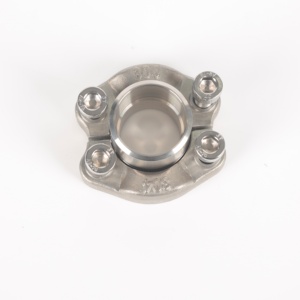
Hot Selling SAE Weld Neck Flange Stainless Steel Forged Polished with Locking Elements for Engineering Machinery
Forged 304/316 | Locking Mechanism | High Dynamic Fatigue Resistance

Custom-machined companion and screwed flanges engineered for volatile, high-pressure environments where field welding is restricted or hazardous.
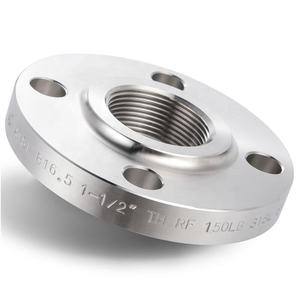
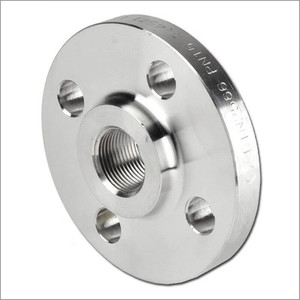
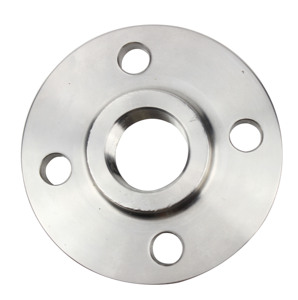
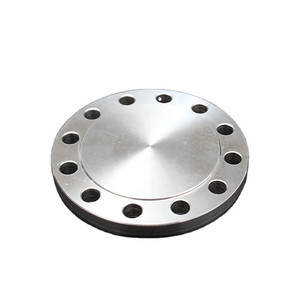
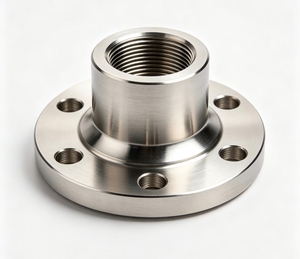
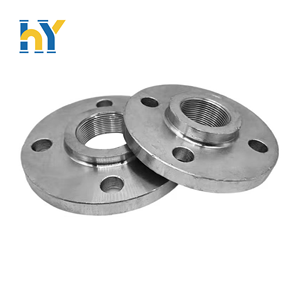
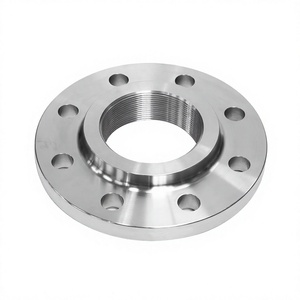
A comprehensive analysis of load distribution, thread pitch geometry, and metallurgy in high-pressure screwed joint architectures.
Threaded flanges—alternatively designated as screwed or companion flanges—serve a critical engineering purpose in industrial process installations where fusion welding poses severe procedural hazards or is metallurgically prohibited. Fabricated under stringent dimensions standardized by ASME B16.5, DIN 2566, EN 1092-1, and BS 4504, these components feature an internally tapered or parallel female thread machined through the bore. This internal thread engages seamlessly with external pipe threads without requiring thermal heat input, eliminating the structural heat-affected zones (HAZ) that typically compromise high-alloy steels and post-weld corrosion resistance.
In hazardous environments—including active offshore upstream manifolds, explosive brownfield natural gas compressor stations, and chemical plants processing volatile hydrocarbons—field welding mandates total facility depressurization and extensive inert gas purging. OEM threaded flanges mitigate these operational bottlenecks. Machined from solid forged billets of ASTM A105 carbon steel, low-temperature ASTM A350 LF2, or high-tensile austenitic stainless grades (such as ASTM A182 F304L and F316L), our screwed flanges provide leak-tight structural integrity across Class 150 up to Class 2500 pressure envelopes when torque-sealed with calibrated anaerobic compounds or engineered seal welds.
The primary failure mode in sub-standard threaded flanges stems from uneven thread load distribution. When exposed to cyclical thermal expansion and mechanical vibration, the first two engaged threads routinely bear up to 60% of the axial piping stress. At our forging facilities, every billet undergoes closed-die isotropic hot forging, ensuring uninterrupted grain-flow aligned with the component's longitudinal profile. Internal threads are precision-cut via multi-axis CNC threading passes with rigorous pitch diameter tolerances conforming to ANSI/ASME B1.20.1 (NPT) and ISO 7-1 (BSPT). This eliminates micro-burrs, prevents thread galling during torquing, and guarantees uniform radial load dissipation throughout the flange hub.
How supply chain decentralization, strict fugitive emission laws, and modular plant architectures are transforming OEM flange procurement.
EPC contractors are transitioning from stick-built onsite assembly to modular skid architecture. Sourcing demands custom-machined threaded flanges integrated directly with high-pressure manifold blocks to reduce field-assembly man-hours by up to 35%.
With global tightening of EPA Method 21 and ISO 15848-1 leak limits, procurement teams favor threaded flanges manufactured with specialized machined gasket finishes (serrated concentric or spiral grooves between Ra 3.2µm and 6.3µm) for critical sealing integrity.
Procurement directors no longer accept anonymous re-seller paperwork. Engineering specifications now demand direct factory pedigree, including 3.1 Mill Test Certificates verifying raw billet heat numbers, PMI reports, and PED 2014/68/EU compliance before vessel dispatch.
Advancing the mechanical threshold of piping components through digital manufacturing, duplex metallurgy, and high-performance surface engineering.
Traditional lathe threading leaves tool chatter marks that encourage crevice corrosion. We implement high-speed 5-axis CNC machining centers running synchronized threading cycles, securing pitch tolerances down to ±0.01mm across both NPT taper angles and Whitworth standard forms.
To combat aggressive sour gas environments (H2S and high chlorides), our metallurgy R&D is scaling threaded flange production in UNS S31803 / S32205 Duplex and UNS S32750 Super Duplex, achieving yield strengths exceeding 550 MPa paired with PREN values greater than 42.
Stainless steel threaded components frequently suffer from severe cold-welding or galling under high-torque makeup. We deploy electrolytic nickel coatings, thermal diffusion zinc baths, and PTFE fluoropolymer treatments to guarantee smooth assembly and non-destructive maintenance disassemblies.
Backed by decades of heavy forging, in-house metallurgical testing, and global export compliance.
Fully compliant with the European Pressure Equipment Directive 2014/68/EU, guaranteeing structural suitability for safety-critical pressure vessels.
Operating dedicated hydraulic drop forging lines and ring-rolling mills capable of manufacturing threaded flanges up to 60" outer diameter.
Every flange batch undergoes 100% Optical Emission Spectrometry, ultrasonic non-destructive testing, and hydrostatic pressure qualification.
Proven supply chain partner for EPC operators across the Middle East, Far East Asia, North America, and West Africa, packaged in seaworthy crates.
Direct answers regarding wall thickness schedules, thread standards, seal-welding options, and compliance certification.
Threaded flanges are mandatory in brownfield revamps where flammable hydrocarbons prohibit open-flame hot work. They are also chosen for connecting small-diameter lines (under 4 inches) where thermal welding introduces internal oxidation scale or restricts fluid flow.
We routinely machine ANSI/ASME B1.20.1 NPT (National Pipe Taper), ISO 7-1 / BS 21 BSPT (conical thread), BSPP (parallel thread), and metric DIN 2566 forms. Customized pitches or API 5B casing/tubing threads can be CNC-machined according to your engineering drawings.
Yes. In critical services experiencing cyclic temperature changes, a small fillet seal weld can be deposited between the pipe and the back hub of the flange. All thread sealants must be completely cleared prior to deposition to eliminate porosity and weld embrittlement.
Every shipment is furnished with comprehensive EN 10204 Type 3.1 Mill Test Certificates. Documentation records heat number traceability, chemical composition (C, Mn, Si, P, S, Cr, Ni, Mo), yield and tensile mechanical results, hardness, and ultrasonic NDT reports.
We forge and machine threaded flanges conforming to ASME B16.5 across Class 150, Class 300, Class 600, Class 900, Class 1500, up to Class 2500, alongside European PN6 through PN100 ratings in carbon, stainless, duplex, and nickel alloy configurations.
Austenitic stainless steels (304L, 316L, 321) are inherently susceptible to galling. We utilize high-precision CNC thread machining to achieve a superior micro-finish, complement parts with specialized anti-seize paste, and provide optional anti-galling coatings upon request.
Consult with our engineering team today for technical dimension verification, custom drawings, material test certifications, and volume project pricing.