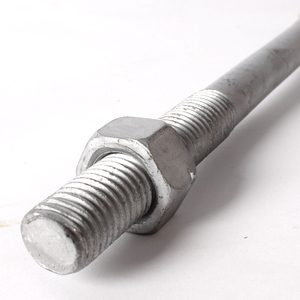
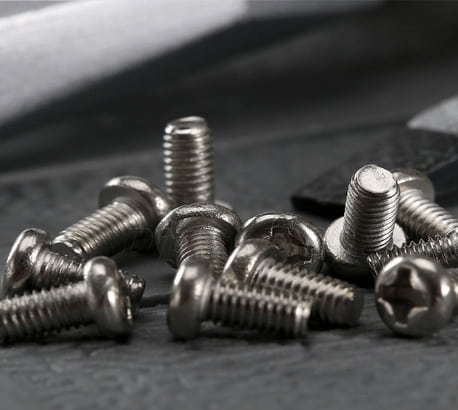
ASTM A193 B7 Hot-Dip Galvanized High-Strength Double End Stud
Material:AISI 4140/4142 Cr-Mo Steel
Coating:Hot Dip Galvanized (HDG) / Cadmium
Duty:Utility Pole, Crossarm & High-Tensile Bolting

Precision-manufactured forged components and bolting systems built to ASTM, ASME, DIN, and EN specifications for demanding refinery, subsea, chemical processing, and power infrastructure projects.
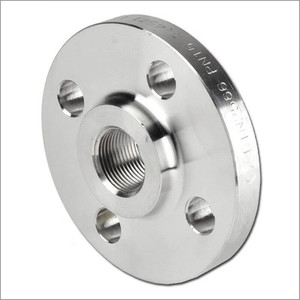
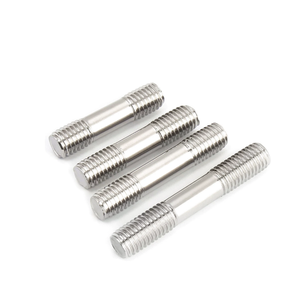
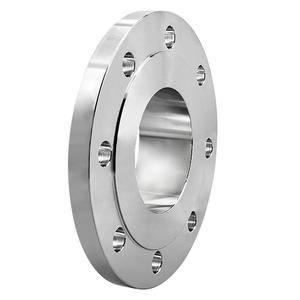
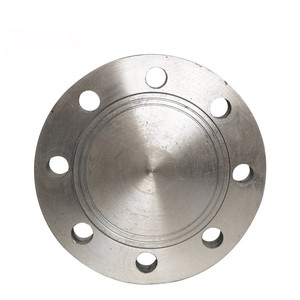
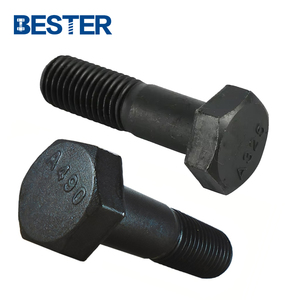
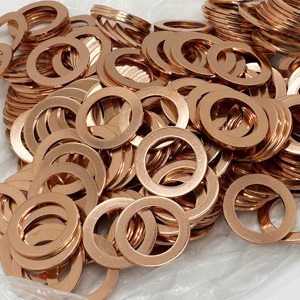
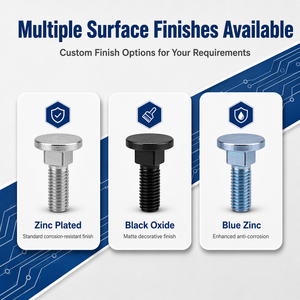
As a PED approved manufacturer and Fastener Manufacturers Association of India (FMAI) member, we combine European-standard quality compliance with cost-effective industrial manufacturing scale.
Unlike machined billet or cast flanges, our hot closed-die forging process yields uninterrupted circumferential metallurgical grain flow. This ensures maximum yield strength, fatigue endurance, and resistance to cyclic thermal shock in critical pressure-containing joints.
Every single production batch passes a multi-tiered inspection regiment before international release. We employ digital optical emission spectroscopy (OES), ultrasonic testing (UT), and magnetic particle inspection (MPI) to guarantee zero subsurface defectivity.
From custom face finishes (concentric serrated, spiral serrated, smooth finish Ra 3.2–6.3 µm) to proprietary high-temperature geometries, our engineering team collaborates with client EPCs from initial AutoCAD/SolidWorks 3D models to volume container shipments.
Choosing the correct forged steel grade is the single most critical determinant of operational longevity in pressurized piping systems. Premature flange distortion or bolt relaxation during continuous operation can result in catastrophic joint blowouts, environmental fugitive emissions, and costly unplanned refinery shutdowns.
For elevated temperature duties (up to 538°C), ASTM A182 F11, F22, and F91 alloy steels provide superior creep-rupture strength. In cryogenic LNG processing stations operating down to -196°C, low-temperature carbon steels like ASTM A350 LF2 and austenitic alloys like ASTM A182 F304L/F316L remain indispensable due to their avoidance of ductile-to-brittle transition phenomena.
NACE MR0175 / ISO 15156 Compliance: All sour service flanges supplied by Viha Steel & Forging undergo controlled heat treatment, limiting Rockwell hardness to ≤ 22 HRC to prevent sulfide stress cracking (SSC) and hydrogen-induced cracking (HIC).
| Material Standard | Common Designation | Tensile Strength (Min) | Yield Strength (Min) | Operating Temp Range | Typical Mating Bolting | Target Industry / Medium |
|---|---|---|---|---|---|---|
| ASTM A105N | Normalized Carbon Steel | 70 ksi [485 MPa] | 36 ksi [250 MPa] | -29°C to 425°C | ASTM A193 B7 / A194 2H | Refineries, steam lines, general oil & gas |
| ASTM A350 LF2 Cl.1 | Low Temp Carbon Steel | 70 ksi [485 MPa] | 36 ksi [250 MPa] | -46°C to 345°C | ASTM A320 L7 / A194 Gr. 7 | Arctic drilling, cross-country gas pipelines |
| ASTM A182 F316/316L | Moly Austenitic Stainless | 70 ksi [485 MPa] | 25 ksi [170 MPa] | -196°C to 815°C | ASTM A193 B8M / A194 8M | Offshore platforms, chemical process plants |
| ASTM A182 F51 / F53 | Duplex / Super Duplex Steel | 116 ksi [800 MPa] | 80 ksi [550 MPa] | -50°C to 300°C | ASTM A453 Gr. 660 / Duplex Studs | Subsea manifolds, high-chloride desalination |
| ASTM A694 F52 / F65 | High-Yield Linepipe Steel | 66–77 ksi [455–530 MPa] | 52–65 ksi [360–450 MPa] | -29°C to 200°C | High Tensile 8.8 / 10.9 Bolting | Long-distance high-pressure transmission |
Total transparency from ingot sourcing to on-site delivery. Every stage is rigorously monitored to meet ISO 9001:2015 and PED 2014/68/EU Module H compliance.
100% optical emission spectrometer verification of chemical composition prior to furnace charging.
Closed-die hot forging creates optimum grain density and eliminates internal mechanical voids.
Computerized normalizing, quenching, and tempering cycles guarantee uniform core hardness.
Tolerance-controlled machining of bolt holes, gasket phonographic grooves, and weld preps.
100% Ultrasonic Testing (UT) per ASTM A388 and Wet Fluorescent Magnetic Particle Inspection.
Lot-based tensile, yield, elongation, and Charpy impact tests at designated cryogenic temperatures.
Permanent dot-peen stamping of size, class, heat number, and PED marking for total traceability.
Anti-rust oil, edge flange protectors, VCI liners, and fumigated timber crates for global shipping.
Navigating global geopolitical supply chains, green metallurgy mandates, and digital traceability requirements in energy infrastructure procurement.
Surging global demand for liquefied natural gas export terminals requires extensive supply of ASTM A350 LF2 and austenitic stainless steel flanges tested for zero brittle failure at -196°C.
Transitioning gas infrastructure to pure hydrogen blends necessitates forging with ultra-low micro-void ratios and strict inclusion control to prevent catastrophic hydrogen-induced embrittlement.
High-efficiency forging methods minimize scrap metal generation, significantly curtail machining cycle times, and lower raw material carbon footprints for ESG-conscious international project buyers.
Rather than utilizing solid nickel alloys for entire massive valves and flanges, EPCs increasingly demand A105N or F22 base forgings clad with 3mm corrosion-resistant Inconel 625, cutting costs by up to 60%.
Major international oil companies (IOCs) now require digital QR-coded Mill Test Certificates linked to tamper-proof databases, combating the proliferation of counterfeit steel in critical marine trunklines.
Direct technical answers to the most common inquiries evaluated by piping design engineers, QA/QC inspectors, and international procurement managers.
Forged flanges undergo compressive thermal plastic deformation, producing continuous directional grain flow that aligns with the contour of the flange neck and face. This eliminates the blowholes, shrinkage porosity, and brittle dendritic structures common in steel castings. Forged flanges exhibit up to 35% higher tensile and fatigue resistance, making them mandatory under ASME B31.3 for high-pressure, flammable, or hazardous fluid transport.
ASME B16.5 governs steel pipe flanges and flanged fittings from nominal pipe sizes (NPS) 1/2" up through NPS 24" across pressure classes 150 to 2500. For large-diameter pipelines exceeding 24" (NPS 26" to NPS 60"), ASME B16.47 applies. ASME B16.47 divides further into Series A (originally MSS-SP-44, featuring thicker, heavier flange cross-sections) and Series B (originally API 605, featuring more compact dimensions with smaller, more numerous bolt holes for compact space requirements).
In accordance with ASME B16.5 paragraph 6.4.5, standard raised-face (RF) flanges are machined with a serrated concentric or spiral groove finish having an average roughness (Ra) between 125 µinch and 250 µinch (3.2 µm to 6.3 µm) with a 45 to 55 grooves-per-inch tool pitch. This micro-grooved surface allows semi-metallic and spiral wound gaskets to interlock securely under compressive bolt preload, preventing interfacial gasket blowouts under cyclical pressure.
A bolted flange joint functions as an elastic clamping system. If low-strength fasteners (such as ASTM A307) are installed in place of quench-and-tempered alloy studs (such as ASTM A193 B7 or B16), the fasteners will undergo plastic elongation or creep during pressure transients. This relaxation reduces gasket seating stress below the minimum sealing threshold (m and y factors), causing hazardous joint leakage. We provide pre-engineered, factory-matched bolt sets with certified proof-load testing.
The Pressure Equipment Directive (PED 2014/68/EU) is a mandatory European Union regulatory requirement for pressure components operating above 0.5 bar. As a PED-approved manufacturer, Viha Steel & Forging verifies that all raw materials are melted by ISO 17025 accredited steel mills, welding/forming processes are certified, and all products are accompanied by authentic EN 10204 Type 3.1 inspection certificates, guaranteeing zero customs bottlenecks for European projects.
High-strength steel fasteners exceeding 1000 MPa tensile strength (e.g., Grade 10.9 or ASTM A490) are highly susceptible to hydrogen absorption during acid pickling prior to hot dip galvanizing. To completely neutralize this risk, we implement mechanical blast cleaning in lieu of aggressive acid pickling, followed by immediate post-baking hydrogen de-embrittlement at 190°C–220°C for at least 4 to 12 hours according to ASTM F1941 / ISO 9588 standards.
Submit your fabrication drawings, bill of materials (BOM), or project tender specifications directly to our senior metallurgical engineering desk in Mumbai. We provide comprehensive technical feasibility reviews, competitive export pricing, and verifiable mill certifications within 24 hours.