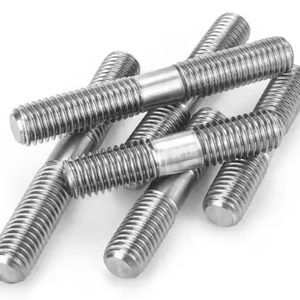

Integrate our precision castellated retaining nuts with heavy studs, high-tensile bolt sets, and high-integrity flange assemblies engineered to severe international standards.
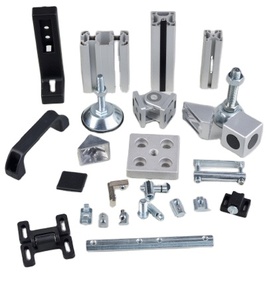
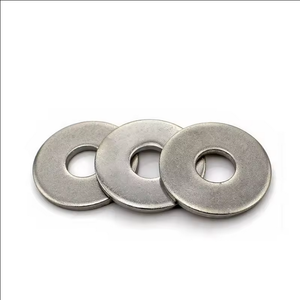
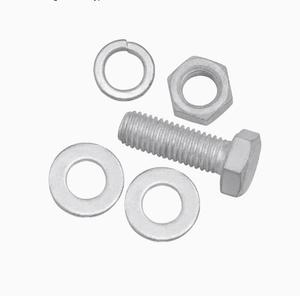

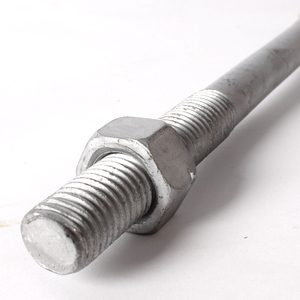
Castle nuts (castellated nuts) are cylindrical-crested, positive-locking threaded components designed for critical rotational assemblies where dynamic shear loads, cyclic vibrations, and axial reversals prevent the reliable use of friction-based locking mechanisms.
Unlike standard DIN 934 hex nuts, a full-height castle nut (DIN 935 / ISO 7035) incorporates an elevated round turret protruding above the primary hexagonal driving flat. This crown houses precisely milled radial slots designed to seat a split cotter pin (DIN 94 / ISO 1234) or safety wire through a cross-drilled bolt shank.
Conversely, thin slotted nuts (DIN 937 / DIN 979) mill slots directly into the hex flat body without the elevated turret, lowering axial proof load ratings but suiting space-constrained assemblies such as wheel hub spindles, differential pinions, and steering tie-rod linkages.
In high-vibration automotive suspension, aerospace control surfaces, and rail transit bogies, chemical threadlockers (anaerobic resins) degrade under elevated thermal cycles, while prevailing-torque all-metal distorted thread nuts or nylon-insert lock nuts lose frictional tension under severe transverse vibration (Junker test failure).
Castle nuts provide absolute positive mechanical interlocking. Even if clamp preload dissipates entirely due to thermal creep or joint settlement, the retained cotter pin mechanically bars the fastener from rotating past the radial slot envelope, entirely preventing catastrophic run-off disassembly.
The primary engineering constraint when installing castellated nuts is achieving specified target preload while maintaining slot-to-hole alignment. Tightening must follow calculated seating parameters:
Torque is applied to the nominal minimum clamping threshold. If the radial slot does not line up with the cross-drilled hole in the mating stud or bolt, torque is progressively increased within the maximum allowable proof yield window (never loosened to match alignment) until the pin slides freely through.
Comprehensive design parameters across metric and imperial standards manufactured in our advanced forging facilities.
| Nominal Size | Standard | Available Materials & Grades | Slot Width (Nom. mm) | Total Height (mm) | Recommended Cotter Pin | Primary Industrial Application |
|---|---|---|---|---|---|---|
| M10 × 1.5 | DIN 935-1 | Class 8.8, 10.9 Carbon Steel; SS 304/316 | 2.8 mm | 12.0 mm | 2.5 × 20 mm (DIN 94) | Automotive ball joints, suspension linkages |
| M16 × 2.0 | DIN 935-1 | Alloy 4140 Quenched & Tempered, Class 10 | 4.5 mm | 19.0 mm | 4.0 × 32 mm | Agricultural machinery PTO shafts, gearboxes |
| M24 × 3.0 | DIN 935-1 | ASTM A194 Gr. 2H, Gr. 7 / Class 8.8 HDG | 5.5 mm | 27.0 mm | 5.0 × 45 mm | Railway rolling stock bogies, track turnouts |
| M36 × 4.0 | DIN 935-2 | High Tensile Alloy Steel, Class 8 / Class 10 | 7.0 mm | 40.0 mm | 6.3 × 63 mm | Heavy mining excavators, crane gantry axles |
| 3/4"-16 UNF | ASME B18.2.2 | Grade 5, Grade 8, Monel K500, Duplex 2205 | 0.188 in (4.76 mm) | 0.797 in | 5/32" × 1-1/2" Split Pin | Aviation landing gear, marine propeller shafts |
| 1-1/2"-12 UNF | ASME B18.2.2 | AISI 4340 Ni-Cr-Mo, Phosphor Bronze C51000 | 0.344 in (8.73 mm) | 1.516 in | 5/16" × 2-1/2" Split Pin | Offshore winch drums, heavy structural pivots |
Global fastener procurement is experiencing profound structural transformations driven by ESG transparency, automated zero-defect mandates, and advanced metallurgy.
Traditional manufacturing of castellated nuts relied on secondary manual indexing machines to slot hex blanks, introducing burrs, radial runout errors, and inconsistent slot depths. Modern Tier-1 Chinese manufacturers utilize progressive multi-station cold formers that form the cylindrical crown near-net-shape, paired with inline CNC disc-cutter indexing that achieves slot concentricity within ±0.02 mm.
This automated flow eliminates micro-fractures along the slot root fillet, drastically improving dynamic fatigue endurance under cyclic impact stresses.
European and North American OEMs now mandate verified emissions reporting across Scope 1, 2, and 3 fastener footprints. Chinese fastener supply chains are rapidly transitioning toward Electric Arc Furnace (EAF) steel wire rods with up to 85% certified scrap content, reducing embodied carbon per metric ton below 1.2 t CO2e.
Traceable batch documentation linked to mill heats ensures effortless customs clearance under the EU CBAM mechanisms without tariff penalizations.
In high-tensile property classes (Class 10.9 and Class 12.9), conventional electro-galvanizing introduces significant risk of atomic hydrogen absorption during acid pickling and electro-deposition. Future procurement contracts explicitly stipulate non-electrolytic zinc flake coatings (e.g., Geomet, Magni, Dacromet) complying with ISO 10683.
These coatings yield over 1,500 hours of neutral salt spray (ASTM B117) resistance without hydrogen baking risks, ensuring total integrity in subsea, offshore wind, and chemical infrastructure.
Combining heavy forging heritage with high-volume precision fastener automation, we deliver end-to-end metallurgical security for the world's most demanding engineering projects.
Certified under Pressure Equipment Directive (PED 2014/68/EU) and FMAI member standards, qualifying our fasteners and flanges for severe pressure containment vessels, boilers, and hazardous fluid transfer.
Continuous atmosphere-controlled continuous mesh-belt heat treatment lines maintain absolute control over martensitic transformation, hardness gradients (22–32 HRC or 32–39 HRC), and Charpy V-notch impact toughness at -46°C.
100% automated high-speed eddy-current and 360-degree laser imaging sorting tables reject any micro-crack, missing slot, thread burr, or out-of-tolerance pitch diameter down to 50 PPM defect limits.
In addition to 8.8, 10.9, and 12.9 carbon steel, we forge in AISI 304, 316, 316L, Duplex 2205, Inconel 718, Monel 400, Phosphor Bronze, and Titanium Grade 5 across sizes M2 to M100.
Expert answers to critical engineering, inspection, and supply-chain questions encountered by international procurement directors.
DIN 935 represents standard-height castellated nuts capable of carrying full proof load equivalent to standard hex nuts. DIN 937 is a thin slotted nut where slots cut into the hexagonal face without an elevated turret, meant for shear retention on axle shafts with low axial load. DIN 979 is an intermediate thin castle nut featuring an elevated turret but reduced base height.
Slot perpendicularity relative to the nut bearing face is held within 0.05 mm through dual-spindle simultaneous CNC operations. By piloting off the tapped internal thread rather than the outer hex flat, our machining centers eliminate angular wobble during cotter pin insertion.
Yes. We regularly manufacture castle nuts with fine metric thread pitches (e.g., M24×1.5, M30×2.0, M36×2.0) and Imperial UNS/UNF thread classes. Fine-pitch threads allow finer axial preload tuning and reduce the degree of rotation needed to align the radial slot with the bolt hole.
Every shipment is accompanied by an EN 10204 Type 3.1 Inspection Certificate documenting original heat chemical spectroscopy, yield and ultimate tensile strength, Rockwell hardness (HRC/HRB), proof load test results, coating thickness measurement, and Charpy impact energy.
For austenitic stainless grades (A2-70, A4-80), thread cold-welding or galling under high clamp pressure is mitigated by applying our proprietary anti-seize dry-film lubricants (PTFE, molybdenum disulfide MoS2, or silver-based thin coatings) directly to the internal threads prior to packaging.
Small-to-medium parts are sealed in 25 kg heavy-duty poly-lined cartons, securely stacked on heat-treated ISPM-15 compliant euro-pallets, shrink-wrapped with waterproof VCI anti-corrosion barrier sheeting, and strapped with high-tensile steel bands to endure multi-week marine transits.