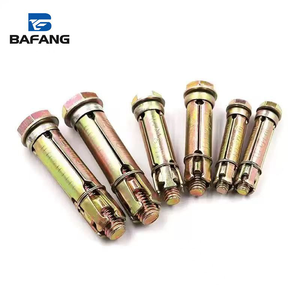
Heavy-Duty 3-Piece Expansion Anchor Bolt, Yellow Zinc Plated Carbon Steel with High Strength
Yellow zinc passivated structural carbon steel anchor assembly engineered for cracked concrete and high-tensile mooring foundations.

Rigorous manufacturing standards deployed across ASTM, DIN, ASME, and EN specifications. Inspected with dimensional verification and documented mill test certification for severe service pipelines.
Yellow zinc passivated structural carbon steel anchor assembly engineered for cracked concrete and high-tensile mooring foundations.
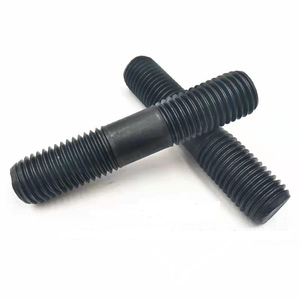
High-integrity metric right-hand thread studs with black zinc plating designed for offshore hydrocarbon processing modules and refineries.
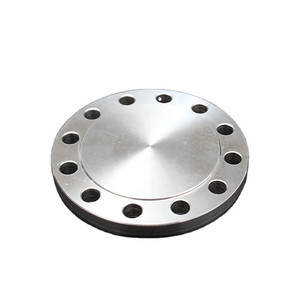
ASME/ANSI standard blind and threaded forged flat-face flanges tested for ambient and high-pressure steam distribution headers.
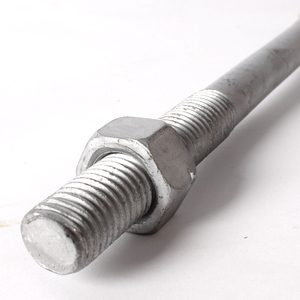
Thermally treated Cr-Mo alloy steel double-end studs with heavy-duty hot-dip galvanizing for utility distribution infrastructure.
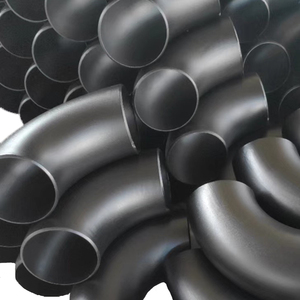
Precision butt weld long radius and short radius 90-degree carbon steel elbows certified for laminar flow and uninterrupted throughput.
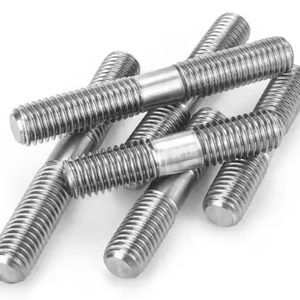
Austenitic 304/A2-70 solution annealed double-end bolts optimized for chemical processing equipment and coastal marine environments.
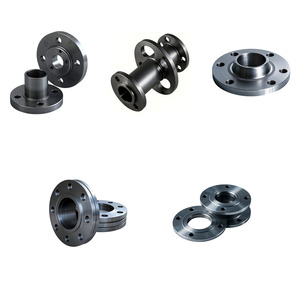
Custom-turned weld-neck, slip-on, and lap-joint flanges manufactured according to ASME B16.5 and client CAD drawings.
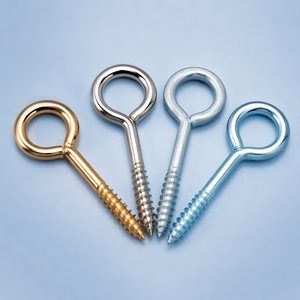
Closed-eye anchoring and suspension screws with precision nickel electroplating providing abrasion resistance and atmospheric security.
Founded in Mumbai in 2010, our manufacturing facility has evolved into an engineering hub specializing in non-ferrous and high-nickel fasteners. Operating as a PED (Pressure Equipment Directive 2014/68/EU) approved manufacturer and recognized member of the Fastener Manufacturers Association of India (FMAI), we engineer solutions designed to eliminate premature joint degradation in the most aggressive chemical and marine environments.
Monel alloys—specifically Monel 400 (UNS N04400) and precipitation-hardened Monel K-500 (UNS N05500)—represent the absolute standard when austenitic stainless steels (such as 304 or 316) yield to chloride stress corrosion cracking, rapid pitting, or galvanic stripping. Our foundry and forging shops control grain orientation and boundary carbide distributions via precision hot forging and solution annealing cycles.
Whether suppling critical subsea risers in the North Sea, hydrofluoric (HF) acid alkylation headers in Middle Eastern refineries, or desalination manifolds in the Gulf and West Africa, every fastener we export is backed by EN 10204 3.1 Mill Test Certificates traceable to original melts.
We provide full verification conforming to ASTM F467 / F468, ASTM B164, BS 3076 NA13/NA18, and DIN 17752. Each order is delivered with raw material melt heat chemical breakdown, ultrasonic/dye penetrant clearance, and certified mechanical tensile reports.
Contact UsAn in-depth analysis of high-nickel copper solid-solution alloys versus age-hardenable systems for engineering consultants, piping specialists, and global procurement managers.
Monel 400 is a single-phase solid-solution nickel-copper alloy (approx. 63% Ni, 31% Cu, with Fe and Mn controls). Lacking a brittle-to-ductile transition phase, it preserves outstanding impact toughness down to cryogenic temperatures (-196°C) while maintaining structural resistance against sulfuric acid, dry chlorine, and concentrated hydrochloric acid gas mixtures.
By integrating micro-additions of aluminum (2.3–3.15%) and titanium (0.35–0.85%) into the Ni-Cu matrix, Monel K-500 achieves precipitation strengthening via gamma prime sub-nanometer intermetallic phases. This provides up to triple the yield strength and double the tensile capacity of Monel 400 while preserving zero magnetic permeability down to -100°C.
Unlike 300-series stainless or duplex steels which can encounter catastrophic sub-surface pitting under stagnant marine conditions, Monel naturally exudes copper ions that deter microbiological encrustation, preventing microbiologically influenced corrosion (MIC) in offshore splash zones and subsea pipelines.
Mechanical yield, elongation thresholds, international equivalencies, and chemical boundaries cross-referenced for EPC engineering compliance.
| Alloy Grade | UNS / Standard | Tensile Strength (MPa) | Yield Strength 0.2% (MPa) | Elongation (%) | Primary Industrial Service |
|---|---|---|---|---|---|
| Monel 400 (Annealed) | UNS N04400 / ASTM F468 | 550 – 620 | 240 – 340 | ≥ 35 | Hydrofluoric acid distillation, marine heat exchangers, fresh & salt water pumps |
| Monel 400 (Cold Worked) | UNS N04400 / BS 3076 NA13 | 650 – 850 | 500 – 720 | ≥ 15 | Marine piping flange bolts, chemical valve stems, subsea instrumentation racks |
| Monel K-500 (Age-Hardened) | UNS N05500 / ASTM F468 | 965 – 1200 | 690 – 850 | ≥ 20 | High-load marine shafts, wellhead equipment, subsea drill collar fasteners, pump impellers |
| 316L Stainless (Reference) | UNS S31603 / A4-80 | 800 | 600 | ≥ 12 | General coastal atmospheric bolting (Prone to pitting in warm stagnant brine) |
How green hydrogen pipelines, localized desalination facilities, and lifecycle cost analyses are reshaping global fastener purchasing contracts.
Global operators are shifting procurement mandates away from lower upfront CAPEX alloys. In marine subsea splash zones, replacing 316L or Super Duplex fasteners every 3 to 5 years due to crevice corrosion incurs steep offshore vessel leasing costs. Specifying Monel 400 or K-500 yields uninterrupted service life exceeding 25 years, driving down OPEX by up to 68% over project lifespans.
As seawater electrolysis installations and SWRO (Seawater Reverse Osmosis) plants expand throughout the GCC, Australasia, and North Africa, high-pressure brine headers demand fasteners impervious to chlorine cavitation. Monel studs maintain continuous passivity in multi-megawatt electrolysis cells where galvanic currents rapidly corrode lesser alloys.
Procurement teams now routinely disqualify distributors lacking upstream mill origin visibility. Buyers insist on single-origin European, Indian, or American melt certificates matching ISO 17025 accredited chemical assays to prevent scrap-contaminated, embrittled fastener heads from entering refinery sour-gas (NACE MR0175/ISO 15156) systems.
Procurement specifications increasingly mandate thread cold-rolling rather than thread machining or cutting for Monel K-500. Cold-rolling maintains continuous uninterrupted grain lines along thread roots, eliminating micro-notches and boosting cyclic fatigue resistance by over 300% on high-vibration subsea wellheads.
Essential technical, metallurgical, and contractual questions answered by our chief materials engineers.
Monel 400 provides corrosion resistance equal to Monel K-500 but possesses moderate mechanical strength (~240-340 MPa yield). When the bolting application involves high tensile clamping, dynamic cyclic fatigue, or high internal operating pressures (such as API 6A valves, blowout preventers, or high-thrust marine propulsion shafts), precipitation-hardened Monel K-500 (yielding up to 850 MPa) is required.
Monel fasteners are almost always installed bare (plain finish) because their passive nickel-copper oxide film provides native protection. However, in heavy assembly scenarios with high pre-loads, PTFE / Xylan coatings or precision silver-plating may be applied to nuts to prevent thread galling, standardize tightening torque friction coefficients, and ensure smooth dismantling during MRO turnarounds.
Yes. Both Monel 400 and Monel K-500 are recognized by NACE MR0175 / ISO 15156 for petroleum and natural gas production systems containing hydrogen sulfide (H2S). However, Monel K-500 must undergo strictly controlled solution treatment and aging cycles to ensure the maximum core hardness does not exceed 35 HRC, avoiding sulfide stress cracking (SSC) vulnerability.
To avoid galvanic corrosion and uneven thermal expansion under severe operating conditions, Monel 400 studs must be paired with Monel 400 heavy hex nuts (ASTM F467 UNS N04400). Similarly, Monel K-500 high-tensile studs must be installed with matching Monel K-500 or Monel 400 heavy nuts and hardened K-500 washers to ensure equalized load dispersion along flange faces.
Our manufacturing facility conducts 100% thread gauge inspections (GO/NO-GO), Liquid Penetrant Inspection (LPI / DPI) per ASME Section V to catch surface seams or head forging folds, Positive Material Identification (PMI) via XRF analyzers to guarantee alloy composition, and eddy-current or ultrasonic testing when requested by third-party inspectors like DNV, Lloyds, or Bureau Veritas.
Standard metric (M6 to M48) and imperial (1/4" to 2") standard lengths in Monel 400/K-500 are supported with raw bar stock in Mumbai for rapid hot forging and thread rolling within 2 to 3 weeks. Custom sizes up to M100 or non-standard thread pitches (8-UN, UNC, UNF, fine metric) are manufactured to order with flexible project-based MOQs.
Receive complete material test certifications, custom drawings validation, and competitive direct-from-manufacturer export pricing for your next project.
Contact Us