Direct mill deliveries with 100% material traceability, EN 10204 3.1 certification, and custom mechanical fabrication compliant with international DIN, ASME, and Pakistan Standards and Quality Control Authority (PSQCA) guidelines.
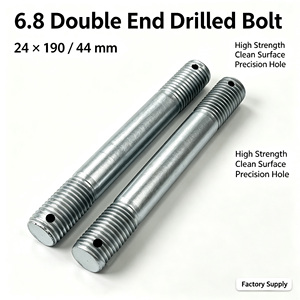
Drilled cotter pin holes, hot-dip galvanized finish, high-tensile alloy for vibratory heavy machinery in cement and heavy processing mills.
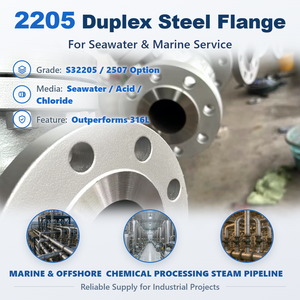
Superb resistance to pitting in saline and chloride-rich seawater; ideal for Port Qasim and Gwadar offshore marine infrastructure.
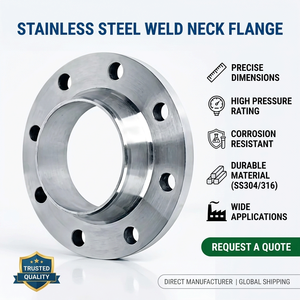
Full-size range DN15 up to DN4000; engineered for petrochemical refining networks and Sui Northern / Sui Southern gas transport pipelines.
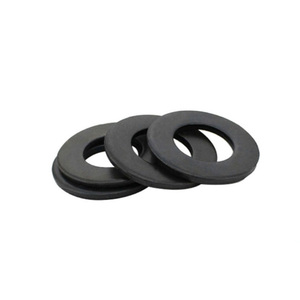
Dielectric barrier and anti-vibration sealing washers used in conjunction with non-magnetic brass fasteners in delicate switchgears.
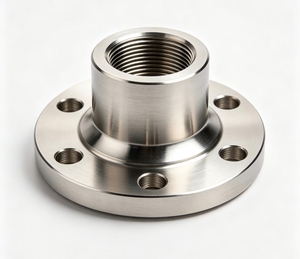
Precision NPT and BSPT threads; anti-corrosive gravity die-cast construction suited for chemical fluid lines and municipal water works.
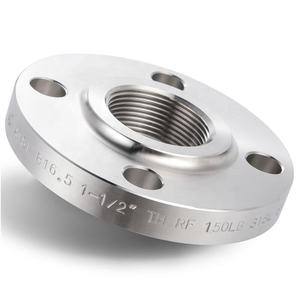
Rated from Class 150 through Class 2500; forged integrity for high-pressure boilers, steam turbines, and thermal power stations across Punjab.
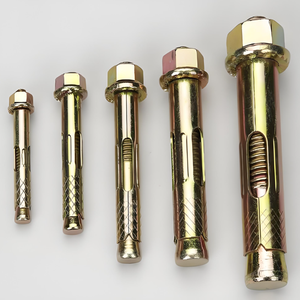
High-shear anchoring resilience for heavy civil engineering, flyovers, industrial warehouses, and metro transit projects in Lahore and Rawalpindi.
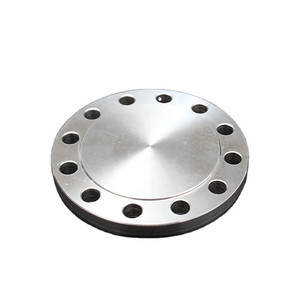
Forged ASTM A105 carbon steel blind and plate flanges; precision facing and bolting hole patterns tested under hydrostatic conditions.
In mechanical assemblies, industrial electrical networks, fluid distribution, and architectural installations, fasteners serve as the critical load-bearing nodes where material failure induces severe operational downtime. For the industrial modernization of Pakistan—spanning high-salinity marine environments in Sindh and Balochistan to intense thermal processing sectors across Punjab and Khyber Pakhtunkhwa—the selection of non-ferrous fastening alloys is no longer a matter of basic procurement; it is a vital engineering safeguard.
As a PED-approved manufacturer, established in 2010 and an active member of the Fastener Manufacturers Association of India (FMAI), our facilities bridge high-volume forging capacity with metallurgical precision. While industrial carbon steel and high-tensile structural bolts (such as ASTM A193 B7 and ASTM A325) remain vital for structural steel framing, brass and specialized bronze alloys offer a distinct suite of physical characteristics: total non-magnetic permeability, superior electrical and thermal conductivity, spark-free safety characteristics in explosive gaseous zones, and outstanding galvanic corrosion mitigation.
Our automated production facilities machine, cold-forge, and thread-roll high-integrity brass fasteners compliant with stringent DIN, ISO, BS, and ASTM specifications. Pakistani industrial specifiers frequently select among several key non-ferrous formulations:
1. Free-Cutting Brass (CW614N / CZ121 / CuZn39Pb3 / UNS C36000): The global benchmark for high-speed CNC turning and thread tapping. Formulated with 57.0%–59.0% Copper, 2.5%–3.5% Lead, and balanced Zinc, this alloy provides exceptional chip breakage and sub-micron dimensional tolerances. It is widely specified across electrical switchgear terminals in Karachi, neutral links, automotive brass inserts, and terminal ground bars.
2. Dezincification-Resistant Brass (DZR / CW602N / CuZn36Pb2As): In areas with high-hardness or high-chloride municipal water networks, standard duplex brass suffers zinc depletion, leaving a porous, structurally compromised copper sponge. Our DZR fasteners incorporate a precision arsenic inhibitor (0.02%–0.15%), undergoing specialized post-forging annealing to stabilize the alpha-phase crystal matrix, meeting ISO 6509 dezincification depth criteria (<100 µm).
3. Naval Brass (CW712R / C46400 / CuZn39Sn1): Enhanced with approximately 1% Tin, Naval Brass resists the aggressive micro-galvanic cell corrosion created by maritime mist and coastal saline ground waters. Commonly manufactured into heavy hex bolts, tie rods, marine studs, and valve gland hardware for Karachi Port Trust (KPT) maritime maintenance and Gwadar Port marine logistics developments.
4. Silicon Bronze (C65500 / CuSi3Mn1) & Phosphor Bronze (CW451K / CuSn4Pb4Zn4): For specialized applications where brass tensile limits are exceeded, these copper-alloy derivatives offer tensile strengths surpassing 550 MPa while retaining full saltwater impermeability and zero spark generation in combustible hydrocarbon atmospheres.
Pakistan's economic framework encompasses diverse climatic zones and industrial operating environments. Our manufacturing facilities tailor threaded fasteners, brass components, forged flanges, and mounting studs to match the rigorous demands of individual regional sectors:
Pakistan's primary energy utilities (including K-Electric, WAPDA, and NTDC) depend on heavy-duty brass split bolts, transformer terminal studs, neutral links, and brass earth bar fixings. The high electrical conductivity and resistance to thermal-cycling oxidation prevent arc-tracking and terminal burnout across heavy distribution substations in suburban Karachi and industrial Lahore.
The China-Pakistan Economic Corridor (CPEC) logistics terminals, maritime docking berths, and desalination facilities in Gwadar require extreme corrosion immunity. Naval brass studs, Duplex 2205 pipe flanges, and silicon bronze bolts secure seawater intake systems, coastal pipelines, and maritime crane assemblies against aggressive salt spray and marine splash zones.
Faisalabad's spinning and wet-processing textile sectors expose equipment to acidic vapors, chlorine bleaching compounds, and high steam condensation. Brass fasteners and stainless pipe fittings prevent galvanic rust from dripping onto fabric runs, maintaining clean operations in weaving machines, washing kiers, and dyeing autoclaves.
Gujranwala is Pakistan’s leading manufacturing hub for sanitary fittings, water pumps, and gas valves. Our factory supplies cold-formed brass metric nuts, DZR brass seat screws, and flared brass union bolts. Simultaneously, natural gas pipeline grids operated by SNGPL and SSGC utilize non-sparking brass meter connections and precision-cut flanges to ensure ATEX/explosive safety.
Pakistan's automotive and tractor assembly supply chains (including assemblers in Port Qasim Industrial Zone and Lahore) rely on slotted brass round nuts, knurled brass threaded inserts for molded plastics, and hydraulic brake banjo bolts. These components guarantee non-seizing threads and zero vibration-induced backing-off in agricultural environments.
The Pakistani industrial fastener and valve accessories sector is undergoing structural transformation driven by fiscal policies, infrastructure expansion, and international quality alignment. Specifiers, project directors, and procurement managers navigate several key trends:
Historically, domestic informal markets in Rawalpindi, Lahore (Badami Bagh), and Karachi (Shershah) relied on recycled scrap copper and secondary remelted brass rods. These materials frequently carry high antimony and iron contamination, resulting in premature thread shearing under torque. However, modern infrastructure standards under CPEC Phase II, international EPC consortia, and institutional buyers now require spectrographic chemical validation, EN 10204 3.1 certification, and verified tensile and elongation data.
The development of priority Special Economic Zones—including Rashakai SEZ in KP, Dhabeji SEZ near Karachi, and Allama Iqbal Industrial City (AIIC) in Faisalabad—has stimulated demand for high-grade non-ferrous and high-tensile hardware. Modern processing factories built in these zones cannot afford unexpected maintenance interruptions; they require precision-machined brass anchors, flange hardware, and threaded rods delivered with traceable heat numbers.
Due to rising grid tariffs, industrial facilities across Punjab and Sindh are installing rooftop and ground-mounted solar PV systems at historic rates. Fastener corrosion in outdoor solar arrays introduces severe electrical resistance and fire hazards. As a result, the market for brass earthing studs, tin-plated brass terminal lugs, and bronze grounding clamps has experienced significant expansion across the country.
Engineering teams frequently evaluate the trade-offs between fastener materials when designing industrial pipelines, marine structures, and electrical substations across Pakistan:
| Fastener Grade | Standard Chemistry | Tensile Strength (MPa) | Electrical Resistivity | Corrosion Resistance | Recommended Pakistani Site Context |
|---|---|---|---|---|---|
| CZ121 / CW614N Brass | Cu 58%, Pb 3%, Zn Bal. | 380 – 480 | 6.6 µΩ·cm | High (Atmospheric / Hydrocarbons) | Electrical Panels & Gas Valves Karachi, Faisalabad |
| CW602N (DZR Brass) | Cu 62%, As 0.08%, Zn Bal. | 340 – 440 | 7.1 µΩ·cm | Very High (Resists Zinc Stripping) | Potable Water / Brackish Lines Lower Sindh, Southern Punjab |
| C46400 (Naval Brass) | Cu 60%, Sn 1%, Zn Bal. | 420 – 550 | 6.8 µΩ·cm | Exceptional in Salt Seawater | Marine / Ship Repair KPT, Port Qasim, Gwadar |
| Duplex 2205 (SS) | 22Cr, 5Ni, 3Mo, N Bal. | 655 – 800 | 85 µΩ·cm | Maximum Pitting Protection (PREN >35) | Chemical Processing Refineries & Offshore Pumping |
| ASTM A193 B7 Alloy | Cr-Mo AISI 4140/4142 Q&T | 860 (≤ 2½") | 22 µΩ·cm | Low (Requires Hot-Dip Galvanizing) | Heavy Structural Bolting Boilers, Bridges, Highway Flyovers |
Drawing on over a decade of high-precision forging and mechanical fabrication, our enterprise delivers reliable non-ferrous and alloy steel fasteners backed by international accreditations. Our technical advantages provide Pakistani commercial importers, public tenders, and private industrial firms with unmatched supply security:
Our pressure vessel fastener and forged flange operations comply fully with the European Pressure Equipment Directive (PED 2014/68/EU). As an established member of the Fastener Manufacturers Association of India (FMAI), our operational integrity satisfies the strictest third-party inspection agencies.
From micro-precision electronic screws (M2) to massive forged high-tensile anchor studs and ANSI B16.5 heavy pipe flanges up to DN4000, our manufacturing facility manages varied volume production with uniform thread-pitch tolerances under ISO, UNC, UNF, and metric standards.
Every forging and machining batch is traced to the original melt heat number. Production undergoes Non-Destructive Testing (NDT), hydrostatic pressure validation, optical emission spectroscopy, salt spray testing (ASTM B117), and hardness mapping prior to packing in seaworthy packaging.
Industrial procurement teams, engineering contractors, and supply officers frequently seek clarity regarding international supply chains, LC mechanisms, customs classifications, and metallurgical verification. Below are expert engineering responses to common inquiries:
Whether you require bulk standard brass metric fasteners, high-tensile structural bolts, DZR components, or large-diameter forged steel flanges, our export engineering department provides direct manufacturer quotes, full technical validation, and reliable logistics support.