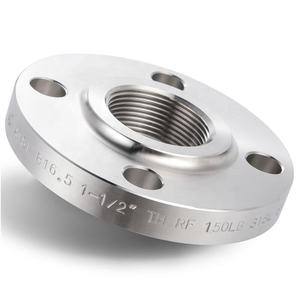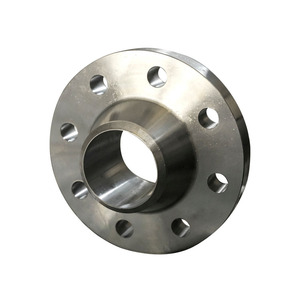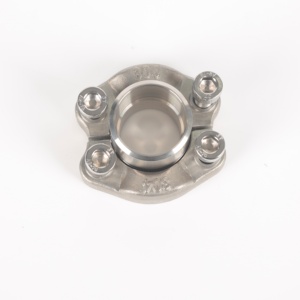
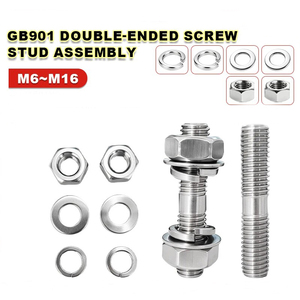
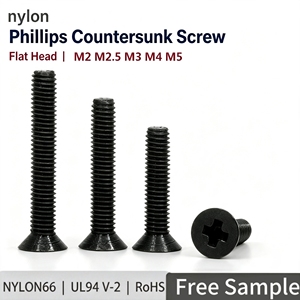
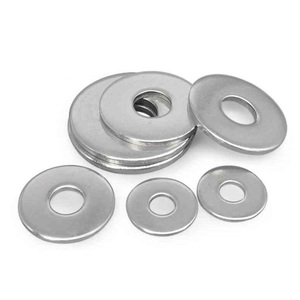
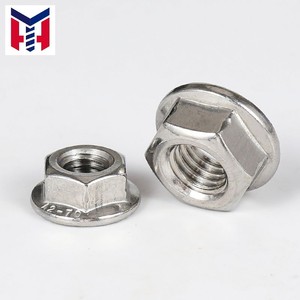
Istanbul sits at the physical and mercantile axis connecting European industrial compliance with Eurasian supply velocity. For Turkish mechanical contractors, procurement directors in Tuzla's shipyards, and structural engineering EPCs operating across the Marmara basin, fastening systems cannot be treated as fungible hardware. The mechanical integrity of a joint depends upon predictable proof loads, strictly controlled thread flank geometry, and verifiable metallurgy. As an established, PED-certified manufacturing powerhouse in China, our facility supplies high-integrity DIN 934 hex nuts, mating studs, heavy hex hardware, and forged industrial flanges specifically calibrated to withstand the operational rigors of the Turkish industrial landscape.
While the European standard EN ISO 4032 has gained adoption across standardized technical drawings, the classic DIN 934 specification remains the pervasive benchmark across Turkish plant maintenance (MRO), structural steel framing, seismic infrastructure retrofitting, and pipeline bolting. The subtle distinctions between DIN 934 and ISO 4032—primarily centered on nut height ($m$) across standard sizes such as M10, M12, and M14—demand absolute transparency and exact manufacturing execution. A discrepancy of a single millimeter in nut engagement thickness can alter the shear failure mode of a bolting assembly under cyclic dynamic stress or seismic loading conditions.
“Engineering reliability is fundamentally grounded in material traceability. Our supply chains bypass open-market raw material trading in favor of direct primary-mill heats, ensuring that every DIN 934 nut delivered to the ports of Ambarlı or Haydarpaşa meets the strict proof stress and chemical thresholds stipulated by ISO 898-2.”
DIN 934 defines the metric thread coarse and fine pitch hexagon nuts for general service across mechanical assemblies. Selecting the appropriate property class is decisive in guaranteeing that joint failure occurs through bolt elongation rather than stripping of the internal nut threads. Stripping failures represent sudden, catastrophic mechanical releases that lack visual warning, whereas bolt necking provides clear maintenance indicators.
| Property Class / Material | Yield / Proof Stress ($S_p$) | Vickers Hardness (HV) | Compatible Bolt / Stud Grade | Recommended Operating Environment |
|---|---|---|---|---|
| Class 8 Carbon Steel | 800 MPa min. proof stress | 180 – 302 HV | ISO 898-1 Class 8.8 | Automotive sub-assemblies, general construction, Gebze machinery |
| Class 10 Alloy Steel | 1040 MPa min. proof stress | 272 – 353 HV | ISO 898-1 Class 10.9 | High-stress structural connections, seismic cranes, Marmaray rail linkages |
| Class 12 High Tensile | 1150 MPa min. proof stress | 295 – 372 HV | ISO 898-1 Class 12.9 | Heavy forging presses, dynamic pressure heads, high-torque industrial machinery |
| Stainless Steel A2-70 (304) | 700 MPa tensile strength | 160 – 210 HV | A2-70 Studs / Hex Screws | Architectural hardware, food processing, municipal water distribution |
| Stainless Steel A4-80 (316) | 800 MPa tensile strength | 180 – 230 HV | A4-80 Studs / Marine Bolts | Tuzla & Yalova naval repair, Bosporus maritime docks, chemical processing |
Our DIN 934 manufacturing protocol utilizes multi-station cold formers for high-speed precision production up to M24, and specialized high-tonnage hot forging presses for large-diameter configurations spanning M27 through M100. During the cold-heading phase, raw wire rods undergo spheroidize annealing and phosphating to eliminate micro-cracks along hexagonal corners. Hot-forged variants receive full solution annealing or quenching and tempering in computer-controlled atmosphere furnaces to preserve uniform grain flow from the core to the peripheral thread peaks.
The geographic concentration of heavy industry within the Istanbul Metropolitan Area presents specific operational environments that dictate strict fastener specifications:
Maritime Shipyards of Tuzla and Yalova: Located directly on the Marmara Sea coast, naval repair yards and new ship constructions encounter aggressive saline mists, brackish waters, and mechanical wash down. For marine exhaust manifolds, hull-mounted pumps, and ballast piping, ordinary carbon steels fail rapidly through galvanic and crevice corrosion. We provide austenitic stainless steel DIN 934 nuts in A4-70 and A4-80 grades with elevated molybdenum content (2.0–2.5%), along with Hot Dip Galvanized (HDG) Class 8 nuts tapped oversize according to ISO 965-5 (6AZ or 6AX tolerance) to maintain corrosion protection without thread binding.
Gebze & Kocaeli Heavy Industrial Manufacturing Corridors: Turkey's heartland of automotive and industrial machinery assembly demands high-volume, defect-free fastening products. We deliver DIN 934 Class 10 and Class 12 fasteners featuring micro-corrosion zinc flake coatings (such as Geomet, Dacromet, or Magni systems) engineered to deliver 1,000+ hours of neutral salt spray protection (ASTM B117) without causing hydrogen embrittlement—a critical requirement for high-tensile structural bolts.
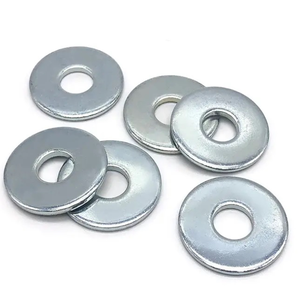
Marmara Seismic Reinforcement & Infrastructure Projects: As civil engineers reinforce bridges, overpasses, and subterranean transport links like the Marmaray and Eurasia Tunnel across the North Anatolian Fault Zone, mechanical hardware must withstand severe cyclic vibration and seismic shear. Our matched assemblies—incorporating high-tensile DIN 934 nuts, structural flat washers (DIN 9021 / DIN 125), and high-strength threaded studs—offer predictable yield curves that safeguard critical civil structures.
Procurement directors across Istanbul face evolving geopolitical, economic, and environmental conditions that directly influence fastener supply chains:
Integration with the EU Carbon Border Adjustment Mechanism (CBAM): Given that Turkish industrial manufacturers export substantial volumes of finished machinery and structural components to the European Union, their upstream supply inputs must comply with rigorous emissions monitoring. Our Chinese manufacturing facilities have deployed clean energy grids, energy-efficient electric induction heating, and comprehensive Scope 1 and Scope 2 carbon accounting systems. We equip Turkish trading partners with verifiable documentation that facilitates border carbon compliance.
Supply Chain Nearshoring vs. Cost Equilibrium: Turkish importers balance European distribution centers against direct factory imports from China. European master distributors carry inventory with high markups, whereas domestic Turkish fastener production is often constrained by wire rod import tariffs and specialized heat-treatment capacities. Our direct factory-to-port logistics program bridges this gap: by consolidating container shipments dispatched directly from Ningbo or Shanghai to Ambarlı Port, Istanbul importers secure Tier-1 factory pricing while eliminating multiple intermediary markups.
Built upon full-cycle internal production, rigorous PED compliance, and advanced metallurgical testing.
Our pressure-equipment fasteners fulfill all essential safety parameters per European Pressure Equipment Directive (PED 2014/68/EU), meeting the demands of high-pressure steam, oil, and petrochemical refineries in Aliaga and Izmit.
From micro-fasteners for electronics and control panels to heavy forging hex nuts (M42 up to M100) destined for power generation turbines, hydromechanical dams, and maritime dry docks, our tooling library covers all requirements.
Every shipment is accompanied by complete inspection documentation traceable to primary heat numbers, detailing optical emission spectrometry (OES) chemical breakdowns, tensile data, and proof stress verification.
We operate advanced centrifuge HDG plants with uniform coating thickness (50–85 microns) compliant with ISO 10684. Thread clearance is controlled through precise post-galvanizing tapping to eliminate galling.
Critical aerospace, offshore, and structural nuts undergo in-house magnetic particle inspection (MPI), ultrasonic flaw detection, and automated eddy current crack inspection to prevent batch flaws.
Heavy-duty double-corrugated seaworthy boxes (25 kg net) shrink-wrapped on Euro-compliant, fumigated solid wood or steel pallets with internal desiccant bags eliminate salt humidity oxidation during transit.
Essential guidance covering customs handling, technical compliance, standards conversion, and shipping logistics.
Direct ocean freight voyages from Shanghai or Ningbo container ports to Ambarlı Port (European side) or Kumport/Haydarpaşa take approximately 18 to 24 days on express shipping lines. We routinely assist clients in managing Bill of Lading documentation, ATR certificates, and packing declarations to accelerate Turkish customs release.
While both standards describe standard hexagonal nuts, ISO 4032 specifies slightly taller nut bodies ($m$) on select metric diameters (e.g., M10, M12, and M14) to enhance stripping resistance. We manufacture strictly according to your purchase order specifications and clearly identify the standard on product stampings and batch labels.
Yes. Our DIN 934, DIN 933, and ASTM fasteners conform to TS EN ISO standards, which represent Turkey's direct national adoptions of EN and ISO specifications. Our quality protocols ensure compliance with local TSE project inspections and third-party testing (e.g., SGS, Bureau Veritas, or TÜV).
We provide full private labeling, tailored box prints (with Turkish technical specifications and barcodes), specific quantity poly-bagging, and customized head markings for property classes and brand insignias, provided minimum commercial order quantities are satisfied.
We work with established banking instruments, including Irrevocable Letters of Credit (L/C at sight) opened through top-tier Turkish and international banks, as well as telegraphic transfer (T/T) structures with favorable deposit terms for repeat corporate clients.
Submit your DIN 934 project schedules, grade specifications, or bulk stock inquiries. Our technical export desk provides turnkey CIF Ambarlı / FOB quotes and comprehensive test documentation within 24 hours.