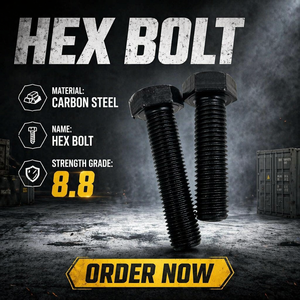
Grade 8.8 / 10.9
DIN 933 / JIS B1180
Precision-manufactured to global standards including DIN, ASTM, ASME, and JIS. Optimized for Tokyo's critical infrastructure, robotics plants, and architectural engineering demanding zero-defect tolerance.
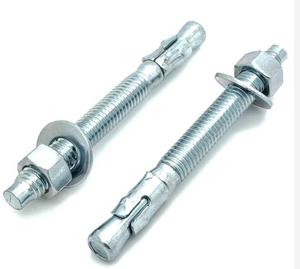
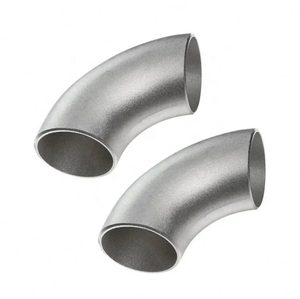
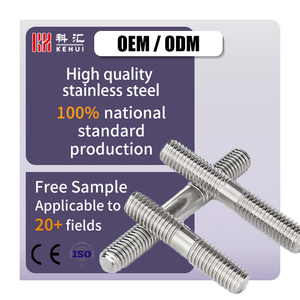
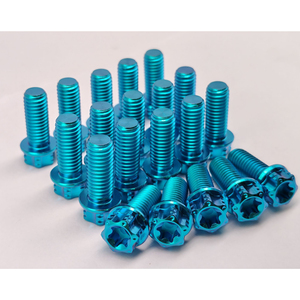
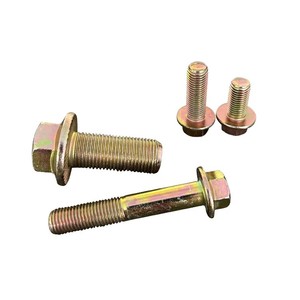
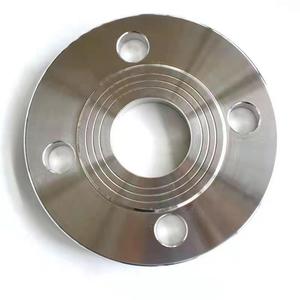
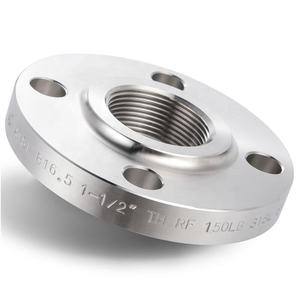
In Tokyo’s high-density urban environment, mechanical fasteners are subjected to unique physical stressors: relentless seismic micro-vibrations, coastal bay moisture, and rigorous Building Standards Law (Kenchiku Kijun-hō) mandates.
Greater Tokyo redevelopment hubs—including Shibuya, Toranomon, and Yaesu—rely heavily on Grade 8.8 and 10.9 high-tensile zinc plated bolts. Fasteners incorporated into tuned mass dampers (TMD) and perimeter moment frames undergo cyclic load fluctuations without micro-crack initiation.
Constructions along Tokyo Bay, Ariake logistics corridors, and Yokohama port terminals face high airborne salinity coupled with sulfur emissions. Standard electro-galvanizing quickly deteriorates without engineered passivation layers.
Kanagawa and Tokyo’s industrial manufacturing sectors require high-precision dimensional tolerances (6g/6H) for automated manufacturing lines, high-speed press dies, and electric powertrain casing assemblies.
Japanese procurement directors are transitioning towards environmentally compliant, high-durability surface treatments that avoid hexavalent chromium (Cr6+) while demanding extended salt spray resistance to counter urban heat-island acid dew cycles.
| Plating / Treatment Specification | Nominal Thickness | Neutral Salt Spray (NSS) to Red Rust | Hydrogen Embrittlement Risk | Primary Tokyo Sector Application |
|---|---|---|---|---|
| Electro-Zinc (White / Blue Trivalent Cr3+) | 5 – 12 μm | 96 – 240 Hours | Moderate (Requires de-embrittlement baking for >1000 MPa) | Indoor electronics, switchgear, automated robotics, automotive brackets |
| Electro-Zinc (High-Build Iridescent / Yellow Cr3+) | 8 – 15 μm | 240 – 480 Hours | Moderate (Controlled de-embrittlement protocol) | Heavy commercial equipment, rail interior framework, HVAC ducts |
| Zinc-Nickel Alloy Plating (Zn-Ni 12-15%) | 6 – 10 μm | 1,000 – 1,500 Hours | Low-to-Medium (Safe with controlled acid pickling) | Underbody automotive, coastal electrical substations, Tokyo Bay projects |
| Hot-Dip Galvanizing (HDG) / JIS H 8641 | 45 – 85 μm | 1,500 – 3,000+ Hours | Very Low (Class 8.8 and lower; avoided on 10.9+ due to heat stress) | Civil bridges, Shinkansen catenary poles, exterior structural frames |
| Zinc Flake Coating (Geomet / Dacromet Type) | 5 – 15 μm | 1,000 – 1,500 Hours | Zero (Non-electrolytic process; no hydrogen generation) | Grade 10.9 and 12.9 high-tensile structural bolts, wind power components |
Japanese Tier-1 contractors strictly follow the Green Procurement Guidelines. Procurement teams verify that all zinc coatings are 100% free from toxic Cr6+, utilizing trivalent conversion layers that match or exceed conventional corrosion thresholds.
Following recent scrutiny in Asian industrial supply chains, Tokyo QA teams refuse unverified batches. Full spectral chemical analysis, Charpy impact toughness testing, and lot-traceable heat numbers are essential prerequisites before container dispatch.
Japanese engineering consortia are actively broadening supply corridors beyond domestic mills. High-capacity Indian forging and threading manufacturers meeting PED and ISO certified standards provide dependable alternatives with robust cost efficiencies.
Direct technical answers addressing standards cross-referencing, hydrogen de-embrittlement verification, and customs clearance logistics for Tokyo Metropolitan projects.
Our Grade 8.8 and 10.9 carbon steel fasteners align directly with JIS B 1051 (mechanical properties) and JIS B 1180 (hexagon head dimensions). For M10, M12, and M14 sizes, our engineering department confirms pitch and across-flat (AF) head specifications (e.g., DIN 933 standard vs. JIS small-head specs) to guarantee flawless tool matching on Japanese project sites.
Electroplating high-strength fasteners (>1000 MPa tensile strength) generates free atomic hydrogen that can cause catastrophic delayed brittle failure. We strictly enforce ISO 4042 and ASTM F1941 protocols: all property class 10.9 bolts enter continuous baking furnaces within 4 hours of plating, held at 200°C–230°C for at least 4 to 8 hours to ensure complete hydrogen effusion.
Yes. Every export lot destined for Tokyo, Yokohama, or Kobe ports includes fully traceable EN 10204 Type 3.1 inspection documentation. Certificates verify direct heat-treatment batch numbers, optical emission spectrometry (OES) chemical breakdowns, proof load testing, tensile and yield strength, elongation percentages, and zinc layer thickness measurements.
Stock items (including metric DIN 933 bolts, threaded studs, and expansion anchors) ship within 48 to 72 hours. Custom-forged or non-standard dimensions generally require 15 to 25 business days. Transit time via direct ocean freight from Mumbai/Nhava Sheva to Tokyo Port is approximately 18–22 days, backed by complete shipping documentation and HS classification for expedited clearance.
Combining over a decade of certified metallurgical mastery, PED EU-grade accreditations, and high-volume cold/hot forging infrastructure to serve high-spec engineering markets globally.
Recognized manufacturer under the Pressure Equipment Directive (PED) and proud member of the Fastener Manufacturers Association of India, ensuring compliant pressure-grade metallurgy.
Every lot undergoes Non-Destructive Testing (NDT), magnetic particle inspection (MPI), ultrasonic flaw detection, and mechanical proof loading before packing.
From micro-machined precision fasteners to massive M100 stud bolts and ASME B16.5 pipeline forgings, our plant meets diverse commercial project requirements.
Our heavy bolting assemblies are successfully deployed in LNG complexes, offshore platforms, and high-speed rail lines across the Gulf, Far East Asia, and Western Europe.