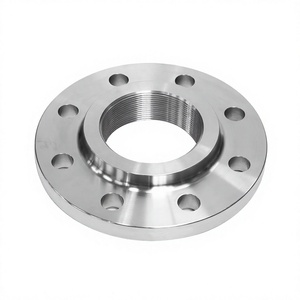
Manufactured under strict ISO 9001 and PED compliance guidelines. From heavy industrial piping supports in Boston Harbor terminals to municipal wastewater and district energy pipelines, our forged and rolled components ensure structural integrity under severe Atlantic freeze-thaw cycles.
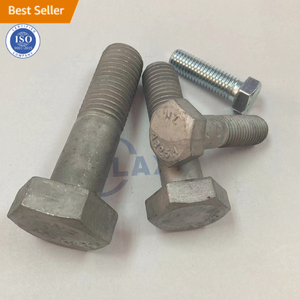
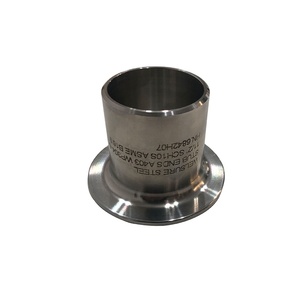
Precision-engineered U-bolt assemblies serve as the primary restraint mechanisms for process piping, structural conduits, marine risers, and utility lines throughout the Commonwealth of Massachusetts. From the Massachusetts Bay Transportation Authority (MBTA) infrastructure to Deer Island Wastewater Treatment Facility and dynamic offshore wind turbine platforms off the New England coast, fastener performance demands rigorous metallurgy, exact load-bearing geometry, and superior corrosion countermeasures.
In mechanical, civil, and marine engineering, a U-bolt is not merely a static bent rod; it is a critical pipe guide, anchor, or clamping element designed to resolve multidirectional forces. Piping networks across Greater Boston's biopharma hubs (Cambridge and the Seaport) and heavy utility stations undergo significant thermodynamic oscillation, seismic micro-vibrations, and fluid hammer loads. When functioning as a standard guide (Run-Fit), the U-bolt allows axial displacement while restraining lateral and vertical movement. Conversely, in clamping configurations (Grip-Fit), controlled preloading prevents slippage under high shear conditions.
Failure mechanisms commonly observed in sub-standard import fasteners include stress-corrosion cracking (SCC) at the threaded root, hydrogen embrittlement following unbaked electroplating, and catastrophic shear due to micro-fissures sustained during cold bending. Viha Steel & Forging eliminates these risks by utilizing induction hot-forming processes for large-diameter rods, preserving continuous material grain flow along the radius, followed by stress-relief annealing and precision thread rolling to ASME B1.1 Class 2A / metric ISO 965-2 6g fits.
Boston represents one of the most demanding operational environments in North America, pairing coastal salt spray with severe winters, road deicing chemicals, and high-density urban transit demands.
Facilities along the Mystic River, Boston Inner Harbor, and Fore River require ASTM A193 Grade B8M (AISI 316) stainless steel and heavy hot-dip galvanized U-bolts. These secure fuel discharge lines, bilge manifold conduits, and marine electrical conduits exposed to perpetual ocean wash, high chloride mist, and low-temperature tidal splashing.
The Sumner, Callahan, and Ted Williams Tunnels, alongside the Central Artery (Big Dig) network, impose stringent life-safety demands. U-bolts anchored to tunnel ceiling strata support high-pressure fire suppression mains, emergency ventilation ducting, and traction power conduits. Products comply with strict tensile, vibration resistance, and Charpy V-notch impact thresholds.
With world-leading life science clusters located across Kendall Square, Waltham, and Watertown, clean steam, WFI (Water for Injection), and chemical lines utilize passivated 316/316L U-bolts fitted with fluoropolymer (PTFE/Neoprene) isolation pads. This configuration eliminates contact fretting and stops galvanic cell formation against stainless piping.
As offshore wind projects scale across coastal Massachusetts, onshore transition substations and marshalling ports (New Bedford and Salem) require heavy structural U-bolts rated to ASTM A325/F3125 and EN 14399-4. These systems anchor high-voltage cabling trays and hydraulic ballast cooling lines enduring heavy cyclic fatigue.
The Massachusetts Water Resources Authority (MWRA) network relies on corrosion-resistant hardware for massive 60" to 120" mains. Deep well sewage lines and secondary clarifying tanks at Deer Island require silicon bronze, aluminum bronze, or thick-coat HDG carbon steel U-bolts capable of resisting hydrogen sulfide (H₂S) gas decomposition.
Fastener procurement managers and mechanical engineering consultants can use this technical guide to balance yield thresholds, proof loads, and galvanic compatibility across New England installations.
| Material Specification | Metallurgical Composition | Min. Tensile (UTS) | Min. Yield Strength | Protective Coating Options | Target Boston Application |
|---|---|---|---|---|---|
| ASTM A193 Grade B7 | AISI 4140/4142 Cr-Mo Quenched & Tempered | 125 ksi (860 MPa) | 105 ksi (720 MPa) | Plain Black, Blue PTFE (Xylan), Hot-Dip Galv. | High-pressure district steam lines, refinery boilers, utility headers |
| ASTM A193 Grade B8 Cl. 1 / Cl. 2 | AISI 304 Austenitic Stainless (Carbide Solution Treated) | 75–125 ksi (515–860 MPa) | 30–100 ksi (205–690 MPa) | Passivated (ASTM A967), Electropolished | HVAC chillers, pharmaceutical piping, architectural water lines |
| ASTM A193 Grade B8M Cl. 2 | AISI 316 (2.0–3.0% Molybdenum addition, Strain Hardened) | 110 ksi (760 MPa) | 95 ksi (655 MPa) | Passivated, PTFE Fluoropolymer Barrier | Boston Harbor piers, coastal storm pumps, salt fog exposed utilities |
| ASTM A36 / A307 Grade A | Low-to-Medium Carbon Structural Steel | 60 ksi (415 MPa) | 36 ksi (250 MPa) | Hot Dip Galvanized (ASTM A153 Class C), Zinc Clear | General commercial HVAC duct hanging, light electrical raceways |
| Silicon Bronze (C65100 / C65500) | Copper Alloy (95% Cu, 3% Si, 1% Mn) | 70 ksi (485 MPa) | 38 ksi (260 MPa) | Self-Passivating Natural Patina | Wastewater aeration tanks, immersed seawater bulkheads, no-spark areas |
| EN 14399-4 Class 10.9 HV | High Tensile Quenched & Tempered Alloy | 1000 MPa (145 ksi) | 900 MPa (130 ksi) | Hot Dip Galvanized with Over-Tapped Nuts | Preloaded seismic bracing, heavy rail bridges, tower anchoring |
Modern supply chain directors serving the Northeast United States face twin pressures: stringent infrastructure compliance and total cost of ownership (TCO) optimization.
Following high-profile urban transit audits, Boston EPC firms mandate 100% heat traceability. Commercial grade "unmarked" hardware has been broadly banned from public bids. Every batch must include an EN 10204 3.1 inspection certificate cross-referencing chemical melts and destructive tensile proofs.
Massachusetts applies over 200,000 tons of sodium chloride, calcium chloride, and magnesium chloride to roads and bridges every winter. Runoff penetrates sub-surface conduit vaults. Engineering teams now specify Hot-Dip Galvanizing with a minimum thickness of 85 microns (ASTM A153) or double-barrier ceramic PTFE coatings to extend life expectancy beyond 30 years.
Purchasers avoid domestic overland freight markups by securing direct mill container shipments arriving through the Port of Boston's Conley Terminal. Establishing direct-from-manufacturer contracts with proven global exporters provides project-specific cut lengths, customized threading, and pre-assembled hardware packages ready for field rigging.
Established in Mumbai in 2010, Viha Steel & Forging has evolved into an international powerhouse in pressure equipment, structural hardware, and engineered flange manufacturing. As a certified PED (Pressure Equipment Directive 2014/68/EU) approved manufacturer and standing member of the Fastener Manufacturers Association of India (FMAI), we bridge the gap between heavy primary forging capabilities and rigorous international standards compliance.
Our integrated facility controls every operational tier: from raw material ultrasonic spectroscopy to induction forging, quench-and-temper heat treatment, CNC thread rolling, and hot-dip galvanizing. Our products are actively deployed across offshore oil & gas fields, deepwater LNG liquefaction facilities, high-speed rail lines, and coastal municipal works spanning 30+ countries. Every order destined for Boston and the broader Northeast corridor is backed by verifiable chemical, tensile, hardness, and non-destructive examination (NDE/NDT) documentation.
Clear, technical, and regulatory answers addressing commercial terms, installation guidelines, and metallurgical standards.
Austenitic stainless steels (Grade 304 and 316) are susceptible to cold-welding or galling under high-torque rundown. We offer factory-applied anti-seize dry lubricants, molybdenum disulfide coatings, or matched nuts with slight metallurgical differential hardness (e.g., pairing 316 bolts with 316L nitrided nuts or bronze nuts) ensuring clean, reversible torque application on job sites.
In Run-Fit (piping guide) setups, two nuts are locked against the support steel, leaving a 1/16" to 1/8" radial clearance around the pipe. This allows thermal axial expansion while preventing lateral drift. In Grip-Fit (clamping) setups, four nuts directly compress the pipe against the structural beam, locking the line in place. Grip-Fit installations require elastomeric cushions to prevent point-load crushing of pipe walls.
In accordance with ASTM A153 / ASTM F2329 standards, bolt threads are centrifuged immediately upon exiting the molten zinc bath at 840°F (450°C) to evacuate liquid zinc from the roots, avoiding manual re-threading that strips the protective alloy layer. Mating heavy hex nuts (ASTM A563 Grade DH) are tapped oversize after galvanizing, creating a precision corrosion-resistant interference fit.
Yes. While we stock thousands of standardized ASME B18.31.5 and DIN 3570 U-bolts for nominal pipe sizes (NPS 1/2" through 36"), our automated bending and threading lines custom-form square U-bolts, round-bend anchors, long-tangent U-bolts, and polymer-lined saddle bolts up to M100 (4" rod diameter) in strict adherence to contractor submittals.
We routinely manage export supply chains under DDP (Delivered Duty Paid), CIF Port of Boston (Conley Terminal), or FOB export terms. All ocean consignments use IPPC ISPM-15 heat-treated seaworthy wooden crates, inner poly moisture wrap, and VCI (Vapor Corrosion Inhibitor) packaging to prevent salt oxidation during Atlantic transit.
Our quality control department executes Magnetic Particle Inspection (MPI) on ferromagnetic forgings and Liquid Penetrant Testing (LPT) on stainless/bronze components to guarantee no micro-cracking at the bend inner radius. Ultrasonic testing verifies bar stock purity, while optical profile projectors verify thread pitch and flanks.
Submit your bills of materials (BOM), project specifications, and CAD drawings directly to our engineering export sales desk. Benefit from manufacturer-direct pricing, certified material traceability, and dedicated project management.
Get a Quote