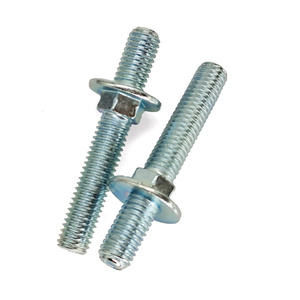
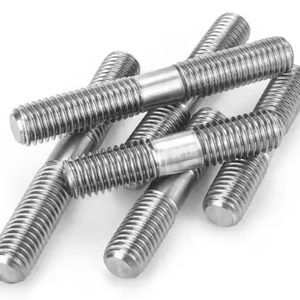
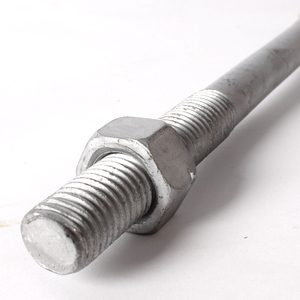
Engineered to ASTM, DIN, ISO, and GB specifications. Fully traceable to heat numbers with Mill Test Certificates (EN 10204 3.1) provided with every delivery batch.
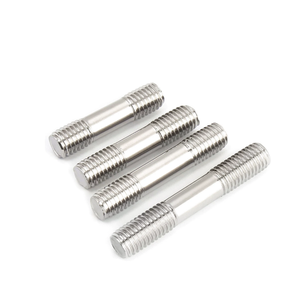
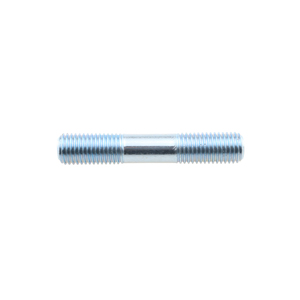
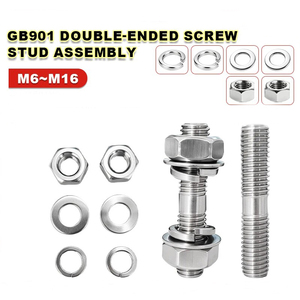
In critical mechanical engineering, pipeline construction, and pressure vessel engineering, double end studs (also known as double-end stud bolts or tap-end studs) fulfill a vital role distinct from standard hexagonal bolts and continuous all-thread rods. Standard bolts introduce torsional shear stresses into the fastener shank during tightening because torque is applied directly through the head. By contrast, a double end stud remains torsionally passive along its primary shank: torque is applied via a lubricated nut running along the free engagement end, translating rotational energy into purely axial preload with superior clamp consistency.
Standardized double-end configurations are categorized primarily under DIN 938 (tap end length ≈ 1.0d for insertion into steel), DIN 939 (tap end length ≈ 1.25d for gray cast iron), DIN 940 (tap end length ≈ 2.0d for aluminum and light alloys), DIN 835 (tap end length ≈ 2.5d), and imperial specifications under ASME B18.31.2 and GB/T 901. The fundamental engineering advantage lies in the differential thread engagement: the tap end is firmly torqued into an internally tapped engine block, manifold, or blind flange hole using an interference-fit transitional thread class, while the opposite nut end utilizes a standard Class 2A / 6g allowance to permit rapid dismantling during turnaround cycles without wearing out expensive internal casting threads.
A rigorous evaluation based on metallurgy capability, testing integrity, pressure vessel certifications (PED/ASME), production capacity, and global export infrastructure.
Consult this reference guide to match mechanical properties, thermal operating thresholds, and corrosive tolerances to your application.
| Material Specification | Metallurgical Composition | Tensile Strength (Min) | Yield Strength (Min) | Operating Temp Range | Primary Application Sector |
|---|---|---|---|---|---|
| ASTM A193 B7 | AISI 4140/4142 Cr-Mo Alloy Steel, Quenched & Tempered | 125 ksi (860 MPa) | 105 ksi (720 MPa) | -29°C to +427°C | High-pressure valves, boilers, oil & gas flanged pipelines |
| ASTM A193 B7M | Controlled-hardness Cr-Mo (Max 235 HBW / 22 HRC) | 100 ksi (690 MPa) | 80 ksi (550 MPa) | -29°C to +427°C | Sour gas, NACE MR0175 / ISO 15156 H2S service |
| ASTM A193 B8 Class 1/2 | AISI 304 Austenitic Stainless Steel (Carbide Solution Treated) | 75–125 ksi | 30–100 ksi | -196°C to +538°C | Cryogenic LNG systems, chemical processing, clean rooms |
| ASTM A193 B8M Cl. 2 | AISI 316 SS with 2.0–3.0% Molybdenum (Strain Hardened) | 110 ksi (760 MPa) | 95 ksi (655 MPa) | -196°C to +538°C | Offshore marine, desalination, chloride-rich media |
| ISO 898-1 Class 8.8 / 10.9 | Medium carbon steel with Boron or Cr-Mo additives, Q&T | 800 / 1040 MPa | 640 / 940 MPa | -50°C to +300°C | Automotive powertrains, gearboxes, railway infrastructure |
| ASTM A320 L7 | AISI 4140 Cr-Mo with guaranteed Charpy V-Notch impact | 125 ksi (860 MPa) | 105 ksi (720 MPa) | -101°C to +340°C | Arctic pipelines, liquefied gas refrigeration plants |
Combining rigorous Indian forging heritage since 2010 with strict European Pressure Equipment Directive (PED) compliance and precision export management.
Legally authorized for critical pressure vessels, heat exchangers, and boiler systems throughout the European Union and Middle East energy corridors.
Unmatched dimensional flexibility from miniature electronic mounting studs (M2) to mega-diameter pipeline and turbine studs (M100) with cut or rolled threads.
Integrated hot-dip galvanizing and high-grade anti-corrosion barrier coatings ensuring smooth nut running and exceptional longevity in coastal utility lines.
Complete metallurgical documentation delivered with every crate: optical emission spectrometry, tensile testing, Charpy V-notch, and ultrasonic NDT.
Dedicated participant in the Fastener Manufacturers Association of India, advocating high engineering standards, clean metallurgy, and ethical trade practices.
Treated heavy-duty timber cases, individual thread protection sleeves, and specialized moisture-vapor desiccants for zero rust upon arrival at foreign ports.
How technological innovation, sustainability mandates, and supply-chain nearshoring are transforming industrial fastener sourcing.
Global EPCs are abandoning paper certs for digital MTCs embedded directly into laser-etched 2D QR codes on the stud head, providing instant immutable verification of heat numbers and chemical analysis to prevent counterfeits.
Under the EU's Carbon Border Adjustment Mechanism (CBAM), buyers are auditing Scope 1, 2, and 3 emissions. Leading forging mills utilize Electric Arc Furnaces (EAF) with scrap-based feeds to slash embodied carbon per ton of fasteners by up to 60%.
Replacing toxic cadmium and heavy hexavalent chromium plating, advanced organic-inorganic hybrid barriers (like Xylan 1070 + zinc nickel sub-layers) achieve 3,000+ hours in ASTM B117 salt spray tests without introducing hydrogen embrittlement.
Direct answers from our senior metallurgists to resolve critical engineering and commercial purchasing questions.
The primary engineering distinction is the engagement length of the "tap end" designed to be permanently screwed into a parent housing. DIN 938 specifies a tap engagement length equal to 1.0 times the nominal diameter (1.0d) intended for steel housings. DIN 939 specifies 1.25d for gray cast iron. DIN 940 features a longer 2.0d engagement suited for softer aluminum, magnesium, and light alloys to prevent internal thread stripping under preload.
High-strength steels with tensile strength ≥ 1000 MPa (such as quenched and tempered ASTM A193 B7) are vulnerable to atomic hydrogen pickup during acid pickling prior to hot dip galvanizing. Viha Steel applies tightly controlled mechanical shot-blasting or flash pickling in inhibited acids, followed immediately by mandatory post-coating de-embrittlement baking at 190°C–220°C for a minimum of 4 to 24 hours per ASTM A143 / ISO 15330 protocols.
Thread cutting interrupts and fractures the natural metal grain lines, introducing microscopic notch points where fatigue fractures typically initiate. Thread rolling is a cold-working forging process that plastically displaces material along the die contours, resulting in uninterrupted grain flow, superior surface finish (reducing frictional scatter during torque application), and work-hardening the thread roots to increase fatigue life by over 30%.
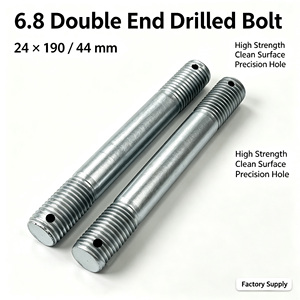
Yes. Beyond standard DIN and ASME series, our Mumbai manufacturing facility regularly cold-forms and hot-forges custom stepped studs (where the tap end thread diameter is larger than the nut end), drilled studs for wire locking or cotter pins, extra-long center unthreaded shanks, spherical-end studs, and specialized threads (metric fine, 8-UN, UNC, UNF, and left-hand reverse pitch) across M2 to M100 diameters.
Connect directly with our engineering sales desk in Mumbai. Request mill price quotations, EN 10204 3.1 material test cert samples, CAD drawing reviews, or custom alloy consultations for your upcoming project.