
Explore our primary manufacturing series of imperial and metric double end studs, engineered to ASTM A193, DIN 938/939, and ISO standards with fully certified mill traceability.
A metallurgical and mechanical reference for engineering procurement managers, EPC contractors, and plant asset integrity teams operating across Costa Rica.
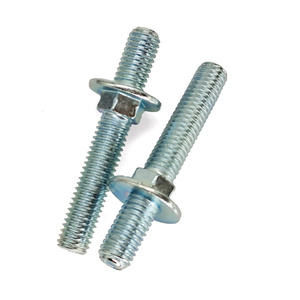
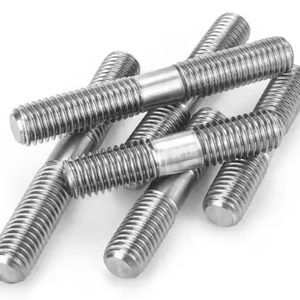
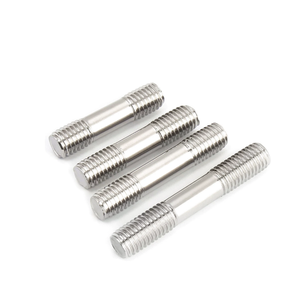
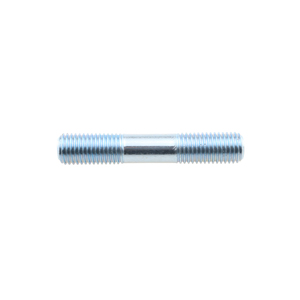
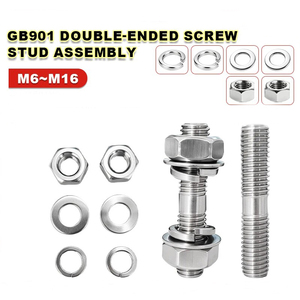
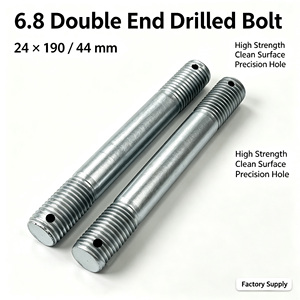
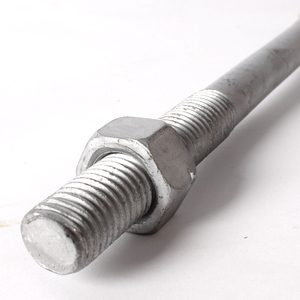
Double end stud bolts (also designated as double-sided threaded studs, tap-end studs, or gland studs) represent an indispensable mechanical fastening solution across high-vibration, high-pressure, and thermal-cycling environments. Unlike conventional through-bolts with hex heads or continuous all-thread rods, double end studs feature threaded profiles at each distal end separated by an unthreaded cylindrical shank (nominal or waist reduced). This structural configuration delivers distinct mechanical advantages under Costa Rica’s demanding operating matrices—which combine tropical hyper-humidity, coastal chloride saturation, geothermal volcanic corrosive steam, and severe seismic load oscillations under the Código Sísmico de Costa Rica (CSCR-2010).
In critical pressure boundary flange assemblies—such as those governed by ASME B16.5, ASME Section VIII, and DIN EN 1092-1—achieving an exact and uniform bolt pre-tension across circular bolt circles is decisive in preventing fugitive emissions and joint relaxation. When a standard hexagonal bolt is torqued into a tapped casting, torsional shear stress is transmitted throughout the entire fastener length, inducing up to 45% torsional friction loss. In contrast, a double end stud installed via a calibrated tap-end allows the nut to rotate smoothly against a lubricated hardened washer while the stud experiences pure tensile elongation. This isolates the female casting threads from rotational galling, prolongs casting lifespan, and ensures repeatable clamping tension across maintenance intervals.
Configured with short metal-end thread lengths (e.g., 1.0d for steel, 1.25d for cast iron, 2.0d for aluminum alloys) engineered to bottom-out or freeze precisely in tapped machinery housings.
Provides ample thread engagement for heavy hex nuts (ASTM A194 2H, Gr. 8, Gr. 8M) accommodating varying flange thicknesses, spectacle blinds, and composite thermal insulating gaskets.
Waisted shank designs match the thread stress area diameter (As), drastically improving elastic resilience and fatigue absorption during cyclic seismic shock loads and acoustic flow resonance.
Costa Rica presents an uncommonly severe test for industrial fasteners. High ambient temperatures, annual rainfall exceeding 3,000 mm in Caribbean and Pacific zones, and airborne volcanic emissions create an acidic, wet-corrosion vector. Sourcing studs requires precise alloy classification:
From volcanic geothermal fields in Guanacaste to sterile cleanrooms in Alajuela Free Trade Zones, double end studs anchor Costa Rica's key economic engines.
Steam extraction wells and binary power cycles operated by the Instituto Costarricense de Electricidad (ICE) at Miravalles, Las Pailas, and Borinquen encounter superheated, acidic geothermal brine loaded with H2S, CO2, and silicates. Our ASTM A193 B7M and 316L double end studs anchor turbine casings, separator vessels, and reinjection manifolds without stress embrittlement.
Costa Rica's massive hydroelectric infrastructure requires high proof-load class 8.8 and 10.9 double end studs to secure Francis and Pelton turbine scroll cases, butterfly shutoff valves, and high-pressure penstocks subjected to dynamic hydraulic hammer and pressure transients.
At APM Terminals Moín and the Port of Caldera, marine loading arms, offshore bunkering manifolds, and mooring capstans face permanent ISO 12944 C5-M marine exposure. We supply hot dip galvanized (ASTM A153) and duplex 2205 double end studs that prevent saltwater crevice oxidation.
Costa Rica is Latin America’s leading medical device export hub. In Coyol Free Zone and BES Free Zone, high-purity water (WFI) generation systems, autoclave chambers, and sterile tubing manifolds demand passivated AISI 316L (A4-80) double end studs featuring Ra < 0.4 μm sanitary finishes.
Large-scale processing plants in San Carlos and the Southern Zone operate continuous juice extraction presses, evaporators, and boiler networks. Fasteners endure aggressive citric acid washes, sugar-rich slurries, and caustic CIP (Clean-In-Place) cycling, where 304/316 double studs ensure long life.
Costa Rica's aggressive National Decarbonization Plan requires constant power transmission upgrades through mountainous, humid cloud forests. Our high-tensile hot dip galvanized double end studs fasten lattice crossarms, insulators, and transformer step-up bushings without corrosion failure.
How engineering directors and purchasing executives in San José, Heredia, and Puntarenas navigate standards, sustainability, and nearshoring.
With Costa Rica located along the active tectonic subduction zone between the Cocos and Caribbean plates, the Código Sísmico de Costa Rica imposes stringent cyclic ductility requirements. Tapped machinery foundations and building flange connections increasingly stipulate waisted-shank double end studs that guarantee calculated plastic elongation prior to tensile necking, reducing catastrophic shear failure during Richter 6.0+ seismic events.
Aligning with Costa Rica’s international reputation for environmental stewardship, national utility tenders (ICE, CNFL, RECOPE) and multinationals operating under ISO 14001 are strictly banning cadmium and toxic electroplating. Procurement has shifted decisively toward trivalent clear zinc, RoHS-compliant Geomet/Dacromet zinc-flake finishes, and thick hot dip galvanizing with zero lead content.
Due to high markups and spotty documentation from local hardware distributors in the Central Valley, tier-1 EPC contractors and Free Trade Zone manufacturers are forming direct mill supply partnerships. Sourcing direct from PED-certified factories cuts landed procurement costs by 22–35% while securing verifiable EN 10204 3.1 Mill Test Certificates traceable to molten raw heats.
Review exact mechanical and chemical parameters before drafting your project purchase order or Bill of Materials (BOM).
| Specification Grade | Raw Metallurgy | Min. Tensile Strength | Min. Yield (0.2%) | Recommended Nut Spec | Optimal Costa Rican Application |
|---|---|---|---|---|---|
| ASTM A193 B7 | AISI 4140/4142 Cr-Mo Steel (Q&T) | 125 ksi (860 MPa) | 105 ksi (725 MPa) | ASTM A194 Gr. 2H Heavy Hex | RECOPE oil storage, industrial boilers, standard steam lines |
| ASTM A193 B7M | AISI 4140/4142 (Max 235 HBW / 22 HRC) | 100 ksi (690 MPa) | 80 ksi (550 MPa) | ASTM A194 Gr. 2HM | Miravalles & Pailas geothermal steam with H2S trace gases |
| ASTM A193 B8 Cl.2 | AISI 304 Stainless (Strain Hardened) | 125 ksi (860 MPa) | 100 ksi (690 MPa) | ASTM A194 Gr. 8 | High-load food processing and exterior architectural mounting |
| ASTM A193 B8M Cl.1 | AISI 316 Stainless (Solution Annealed) | 75 ksi (515 MPa) | 30 ksi (205 MPa) | ASTM A194 Gr. 8M | Marine terminals in Puerto Limón, Caldera seawater pumps |
| ISO 898-1 Class 8.8 | Medium Carbon Alloy Steel (Q&T) | 800 MPa (116 ksi) | 640 MPa (93 ksi) | ISO 4032 Property Class 8 | Hydraulic gates, civil bridges, heavy transport assemblies |
| ISO 898-1 Class 10.9 | Low Alloy Steel Quenched & Tempered | 1040 MPa (151 ksi) | 940 MPa (136 ksi) | ISO 4032 Property Class 10 | Wind turbine tower bolting, preloaded seismic structural joints |
Combining modern forging technology, strict European PED compliance, and proven oceanic export capabilities directly to Central American seaports.
Certified under the Pressure Equipment Directive (PED 2014/68/EU) and an active member of the Fastener Manufacturers Association of India (FMAI) since 2010. Every production run complies with international safety and pressure containment mandates.
From micro double-ended instrumentation studs (M2/M3) up to ultra-heavy forged M100 and 4-inch imperial double studs. We operate CNC lathes, multi-station cold headers, and automated hot forging lines handling both standard runs and custom blueprint drawings.
Eliminate risk on project audits. Every shipment includes certified mechanical testing (tensile, yield, elongation, Charpy V-notch impact down to -46°C) and optical emission spectrometry chemical analyses traceable to the raw ingot melt heat number.
Ranked among the premier exporters of hot dip galvanized fasteners, our in-house centrifuging techniques deliver uniform, drip-free zinc coats compliant with ASTM A153 Class C and ISO 10684, guaranteeing over 1,500 hours of neutral salt spray resistance.
Beyond commercial carbon steel, we maintain continuous stock of phosphor bronze, silicon bronze, aluminum bronze, Duplex 2205, Super Duplex 2507, Alloy 20, and Titanium Grade 2, supporting advanced chemical processing and oceanic subsea installations.
Routine shipping routes directly from Mumbai Port to Puerto Caldera (Pacific coast) and Puerto Limón / Moín (Caribbean coast). Packaged in moisture-proof, seaworthy reinforced wooden crates with VCI corrosion-inhibiting liners for zero damage upon customs clearance.
Answers to key questions concerning import logistics, customs tariffs, testing criteria, and installation protocols.
Ocean freight shipments from our Mumbai export manufacturing facility typically transit between 28 to 36 days. We ship regularly under CIF or CFR terms to Puerto Limón / Moín for Central Valley and Caribbean infrastructure projects, or Puerto Caldera for Pacific coast, Guanacaste geothermal, and Puntarenas energy sites.
All export shipments are formatted to seamlessly clear the Costa Rican customs electronic platform (Tecnología de Información para el Control Aduanero - TICA). We provide itemized commercial invoices, packing lists with net/gross weights, certificates of origin, and harmonized system (HS) classification codes (typically under Chapter 7318 for threaded steel fasteners).
Yes. We manufacture tap-end studs across both metric and UNC/UNF imperial geometries. DIN 938 provides a tap end thread engagement length of approximately 1.0 times diameter (1.0d) for steel housings, while DIN 939 offers 1.25d suitable for grey cast iron. We also produce DIN 940 (2.0d) and custom length engagements tailored to specific client drawings.
Thread galling (cold welding) is common in humid tropical installations using austenitic stainless steel (A2/A4). To counteract this, we provide studs with precision cold-rolled threads rather than cut threads, achieving superior root surface smoothness. Additionally, we can supply studs factory pre-coated with PTFE, molybdenum disulfide (MoS2), or anti-galling dry lubricants.
Each shipment is accompanied by a complete EN 10204 Type 3.1 Mill Test Certificate issued directly by our quality control laboratory. This includes heat chemical composition, tensile proof stress, yield strength, percentage elongation, reduction of area, Charpy impact test values, surface coating thickness reports, and non-destructive testing (MPI/UT) validation.
Yes. Multinational enterprises and contract manufacturers situated in Costa Rican Free Trade Zones (Régimen de Zona Franca) such as Coyol, Cartago, or Forum benefit from streamlined direct-to-dock importing. We provide documentation structured for tax-exempt zone entry, ensuring full compliance with PROCOMER guidelines.
Whether you are outfitting a high-pressure geothermal pipeline in Guanacaste, upgrading port cranes in Puerto Caldera, or procuring high-purity fasteners for Coyol Free Zone, our engineering and export desk is ready to assist with rapid quotations, technical drawings, and custom prototypes.